Search This Blog

Showing posts with label nonfiction. Show all posts

Monday, April 29, 2024

Some Thoughts About Nonfiction and The Cure for Women by Lydia Reeder

 Whenever I go on a mystery/thriller spree, I remember my father encouraging me to broaden my habits--to the point of examining the books I brought home and telling me "No more Nancy Drew (or whatever mystery) unless you bring home something else.  

Because I didn't really know what he meant, I started to wander the aisles in the adult nonfiction sections and pulling books on ancient Greece, Rome, and Egypt, the kind with stunning photographs and simple text, developing a fascination with ancient history.  When I found something especially intriguing, I'd show him and we'd look at the photos and read the associated descriptions.

The librarians never interfered or made an eleven-year-old feel awkward.  Sometimes they would flip through a book and comment on the photos.  It was years before I realized, they were probably checking to see if the books were appropriate.  I just appreciated their interest.  Yay, librarians! 

Did it change my love of mysteries and thrillers?  Not at all, but it encouraged a love of historical fiction and for nonfiction.  My father's influence on something "worthwhile," and my mother's love of reading have guided my reading ever since.

So when I realized I was overdoing the mystery thing again, I selected some books to provide balance.

You Only Go Extinct Once sounded interesting, and in-between the author's attempt at humor there are some interesting facts.  Three or four essays in, I'm skimming out the "humor" and learning a few interesting tidbits.  (Did you know opossums have two vaginal tracts and two ovaries?  And why?)

But for every essay, I'm overlooking the superfluous and the annoying humor and finding only a few sentences that make the essay worth reading.
Will probably skim through some more, but even the "funny" introduction annoyed me.

Not recommended.


Thanks goodness for the next one!  I am on the last few pages now, and The Cure for Women will go on my list of all time favorites.

All really good nonfiction for the layperson is as readable as fiction, well-documented, and fascinating.  The Cure for Women is all of that.  

It begins with Elizabeth Blackwell the first woman to earn a medical degree in America in 1849.  I was familiar with the name through both fiction and nonfiction, but knew nothing else about her.  Her efforts (and those of her sister Emily) for the advancement of women in medicine were remarkable.

However, Dr. Mary Putnam Jacobi, who studied privately under Blackwell and worked with Blackwell at various times throughout her career, is the main focus of the book.  Both women addressed and fought for higher education for women, for the right to attend medical school, and for women's suffrage.

"Full of larger than life characters and cinematically written, The Cure for Women documents the birth of a sexist science still haunting us today as the fight for control of women’s bodies and lives continues."   

I'll be reviewing the book later with some of the salient details of the tremendous obstacles these women and many others that the book discusses.  Highly Recommended.  

You'll probably be tired of hearing about it before I'm finished talking about it.  My husband already glazes over when I say, "That reminds me of _________ in The Cure for Women.

Thanks to NetGalley, St. Martin's Press, and Lydia Reeder, author for a book that I could hardly bare to put down.  Publication date:  Dec., 2024

I just realized that Lydia Reeder is the author of The Dust Bowl Girls, another nonfiction that I loved.  Reviewed here

Saturday, February 05, 2022

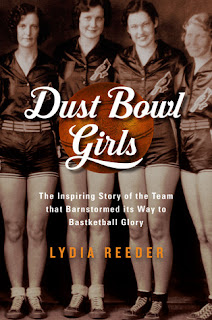
Dust Bowl Girls: The Inspiring Story of the Team that Barnstormed its Way to Basketball Glory by Lydia Reeder; The Self-made Widow by Fabian Nicieza; Best Served Cold by David J. Gatward

 Still catching up on January book reviews.

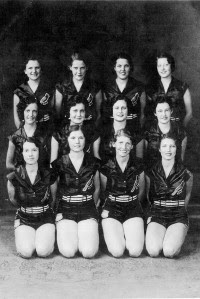
In the early 1930's Coach Sam Babb went on a search to recruit girls for the basketball team at Oklahoma Presbyterian College.  Girls basketball was big in rural Oklahoma, and Sam Babb offered farm girls the opportunity to continue playing and get a college education--something most of these girls never dreamed possible.

The girls Sam Babb recruited were used to hard work; they fed the animals, planted and harvested crops, learned to drive early in order to further aid their farming families, had outdoor toilets in many cases, and no spare money during the depression and the early years of the drought that was turning their state into a dust bowl.  

An education, a dorm with indoor plumbing, and the chance to play basketball provided an opportunity none of them had expected, and the recruits were eager to take advantage of that opportunity.

Primary and secondary sources of interviews with some of the remaining team, letters, journals, scrapbooks, and newspaper articles give insight into these young women who loved the game and were willing (not necessarily eager) to undergo the strenuous practices and keep up with their college courses.  

A little slow at first, but then Lydia Reeder's story of the barnstorming season that led to the 1932 AAU championship captures the inspiring story of the girls and their one-legged coach and hauls you cheering from Durant, OK through Dallas, Houston, and Galveston, TX; through tiny towns like Castor, LA, and the small city of Shreveport, La to Eureka Springs, Ark.

Aside from the continuous shortage of funds plaguing the OKC Cardinals, President Herbert Hoover's wife was actively campaigning against competitive sports for women (with a special distaste for women's basketball) and many colleges had eliminated their popular girls' teams.   I was unaware of this organized campaign that thought competitive sports too strenuous and too "rough" for young women.  Oh, and Lou Hoover was also totally against women competing in the Olympics.   

Doll Harris, Lucille Thurman, and other members of the OKC Cardinals had mostly grown up on farms or ranches and were in no way incapable of the demands of the basketball court.  In 1932, their final match was with the Golden Cyclones led by the Cyclones star player--Babe Didrikson, who later that year went on to win 3 gold medals in track and field at the 1932 Olympics .  Mrs. Hoover be damned. :)

Dust Bowl Girls proved more captivating than I expected.  I thought it would be interesting because I find the 1930's and the dust bowl fascinating, but when I found myself wishing I'd been in the stands for some of their games...that was more than I expected!


Algonquin Books.  nonfiction.  2017.  Print length:  304 pages.


I have not read the first book in this series, and it took me a while to adjust to it.  

from description:  From the cocreator of Deadpool and author of Suburban Dicks comes a diabolically funny murder mystery that features two unlikely sleuths investigating a murder that reveals the dark underbelly of suburban marriage.

I'm not sure what I thought of The Self-Made Widow.  There were, after I began to finally get a grip on the characters, some amusing and satiric elements, but I didn't find it "diabolically funny."  

Andrea (Andie) Stern and Kenny Lee, college friends who were successful in solving an important crime, have another crime to involve them.  Kenny, a journalist, won a Pulitzer for his articles about their college crime-solving, but he has not lived up to his promise.  Andrea, married with five kids, has begun to find the domestic situation exhausting and less rewarding than if she had joined the FBI as a profiler as originally planned.  The two got back together in the first book in this series and once again they are finding crime solving as interesting and invigorating as before.

Currently, one of Andrea's friends has become a widow.  At first sympathetic, Andrea begins to wonder if Molly's husband actually died of a heart attack...or was helped along by Molly?

NetGalley/Penguin Group

Mystery.  June 21, 2022.  Print length:  400 pages.  

The second in the Harry Grimm series set in the Yorkshire Dales.  I thoroughly enjoyed the first book and liked this one as well.  

The team is, as I hoped, becoming three-dimensional and the friendships are deepening.  When confronted with an awful farm accident, they reluctantly conclude that there is something "not right" about it.  The next death makes it clear that while accidents happen, they don't usually have the twisted connections that these deaths have.

Again, I find the camaraderie of this little group in rural Yorkshire warm and funny and the mysteries intriguing.

Weirdstone Publishing
Mystery.  2020.  300 pages.

------------
I find myself suffering from post-dramatic stress.


Wednesday, November 10, 2021

A Hot Mess: How the Climate Crisis Is Changing Our World by Jeff Fleischer

We all have to come to terms with the way the world is changing.  

from description:  We already know what climate change is and many of us understand the human causes. But what will climate change do to our world? Who will be affected (spoiler: all of us!) and how will our lives change in the future? Topics include sea levels, extreme weather, drought, animal and plant extinction, and human and animal migration. Drawing on real-life situations and stories, journalist Jeff Fleischer takes an informed, approachable look at how our world will likely change as a result of our actions, including suggestions on what we can still do to slow down these unprecedented effects.

Extremely easy to read and understand, A Hot Mess discusses the difference between weather and climate, the changes the earth is already experiencing and how the changes affect everything in a domino effect.  

This is one of the best books I've read concerning climate change because it is so clearly written and documented about the very things we have witnessed over the years, though some of it may have escaped our notice at the time. The extreme weather events--hurricanes, droughts, floods, and wildfires--are unavoidable results of a changing climate that we can't ignore.  Everything is connected.  The loss of insect species and amphibians eventually disturb the food chain and those changes in the food chain reach, gradually, but inevitably, all the way up to humans.   

Fleischer details how all of these events are connected and how the droughts, floods, and rising sea waters impact first one species and/or landscape, then another, and continue to move up the chain.  Much of it is common sense, but for some reason, many would rather avoid looking to the future and the way these changes are going to alter the way we live and the effects it will have on our children and grandchildren.  The scientists have known for years, have warned of the consequences, have been ignored.

A Hot Mess should be required reading for all politicians, from mayors to senators, and for all of the young people who will be most at risk.  While the book also gives ways that anyone can make choices that are helpful, it is the responsibility of governments and big business to make the adjustments and adaptations that will make the biggest differences.  

COP26 makes it clear that even the governments that realize the danger are still unable or unwilling to make the hard decisions that will be necessary.  

If more people come to believe what science has been saying for decades, they can influence the outcome by making their opinions known.  How many devastating hurricanes and fires and coasts lost to rising sea levels will we need to endure before that happens?  

A Hot Mess is fascinating reading and written for for teens and young adults, but one of the most concise and readable books I've read on the topic.  

Highly Recommended.  If you are participating in Nonfiction November, give this one a try.

NetGalley/Lerner Pub. Group/Zest Books

Nonfiction/Climate.  Aug. 1, 2021.  Print length:  192 pages.

Monday, October 11, 2021

Murder at Mallowan Hall by Colleen Cambridge and World of Wonders by Aimee Nezhukumatathil

It is the season for garden clean up, Halloween crafting, and fall house cleaning.  And a raft of new book possibilities.  All of these activities can require decisions that I'm reluctant to make.  Which will take precedence today?  Setting a schedule is difficult for me and as a result, I meander through the day doing a little of this and a little of that.   The garden, then a letter, then the garden again.  Back and forth, a little here and a little there.  I keep track of all that on the other blog.

I have made some progress on the garden, and I've been good about catching up on correspondence. A letter every day or so for the last couple of weeks.  The fall housekeeping chores have been neglected this week, but I'm working on some purging of drawers and cabinets.  A box for GoodWill sits on the washing machine, and I add a little at a time, pulling things from hangers and deciding whether or not I'll wear it again.  That extra pound of weight a year became "slightly" more during the pandemic, and I must face the fact that some items will never fit again.   

And Every Single Day There Are Books To Be Read.

Once in a while, I find a cozy that genuinely appeals to me.  Murder at Mallowan Hall by Colleen Cambridge (Agatha Christie fans may recognize the name of the country estate of Christie's second husband, Max Mallowan) proved surprisingly fun.  

It must be a challenge to write a mystery set in one of Christie's homes and have the housekeeper be the protagonist--it could easily end up more of a parody than a mystery. 

Phyllida Bright, however, turned out to be efficient, self-assured, and often inadvertently amusing.  A former army nurse, Phyllida and Agatha are more than employer and employee, having known each other during the war. Agatha's appearances are minimal; it is Phyllida's show.

Unsurprisingly, Phyllida is fond of detective novels and fictional detectives, especially Hercule Poirot.  When Phyllida discovers a body in the library (!) during a country house party at Mallowan Hall, the fun begins.  Confident that she can do a better job than the police, she goes about her own sleuthing, assured that she knows the household and its doings better than they do and will notice what they may miss.  

Parody, or homage, or a little of both, Murder at Mallowan Hall proved to be a thoroughly enjoyable romp with a character who has no difficulty handling whatever comes her way.  We've been introduced to the household, including Bradford, and I'm eager to see what happens in the next book.

NetGalley/Kensington Books

Cozy/Historical.  Oct. 26, 2021.  Print length:  304 pages.


World of Wonders: In Praise of Fireflies, Whale Sharks, and Other Astonishments. I've a fondness for personal essays and Aimee Nezhukumatathil's love of the natural world, lyrical language, and her personal experiences combine in this series of essays.   

The essays have no chronological order, Nezhukumatathil takes a cue from nature (a catawpa/catalpa tree, a peacock, a ribbon eel, fireflies) and pulls together information about the object of her attention, combining it with her personal experiences and her poetic voice. 

While some combinations are a stretch, each element in each essay (the nature writing and the personal anecdotes) has much to offer.  Her mother is a microbiologist and her father a geneticist, so the author's close observation and comprehension of the natural world is understandable. 

There is no need to hurry through the book, an essay or two at a time, and a little time to ponder the words and the importance of say, fireflies, to our lives.  The human touch and Nezhukumatahil's appreciation of the world around us--and it's vulnerability--becomes more intriguing and remarkable as we face the loss of species of both flora and fauna.  

I can't remember where I saw this mentioned, but I'm glad I made the effort to find and read World of Wonders.  I'm susceptible to covers and this one is both curious and beautiful, as is  the author's prose.

Have you read this one?  Did I see a review on your blog?

Purchased.  Milkweed Editions

Nonfiction/Nature/Essays.  2020.  Print length:  165 pages.  


Saturday, May 22, 2021

Nomadland: Surviving America in the Twenty-First Century by Jessica Bruder

from description:  From the beet fields of North Dakota to the campgrounds of California to Amazon’s CamperForce program in Texas, employers have discovered a new, low-cost labor pool, made up largely of transient older adults. These invisible casualties of the Great Recession have taken to the road by the tens of thousands in RVs and modified vans, forming a growing community of nomads.

While I enjoyed the film based on the book, I found the book more interesting and informative.  The stories of the folks who lost their homes through a variety of setbacks and the devastating 2008 financial collapse was an eye-opening and disturbing experience.  Across the spectrum of education and previous income, the loss of jobs and homes wreaked havoc on thousands of people, but the effect of those who have "aged out of the job market" was particularly brutal.  

Perhaps the most unsettling aspect is that large corporations-- that make billions and pay little or no taxes--use these elderly workers (from 60-80 years old) as low-paid, temporary labor for 12 hour labor-intensive shifts.  Although most of the nomads interviewed kept an upbeat attitude in public, the consequences of the callous treatment by companies that use this disposable labor is disturbing, and regardless of trying to keep a positive spin on the situation, the nomads are not unaware of the precariousness of their lives.  They have lost homes, savings, pensions, healthcare, and security.  

It is disconcerting to learn of this subculture of people who have fallen from middle-class to "houseless" travelers.   

Perhaps it is time for Jessica Bruder, to revisit this phenomenon in the wake of the pandemic.

Recommended.

Nonfiction.  Purchased.
-----

After another week of rain, this morning is clear!  


I also want pockets deep enough to put my hands in and to hold things, not those shallow pockets most often found on women's clothing.  Maybe we should all follow Kamryn's example and write companies about what we want in the clothing department!


Monday, June 01, 2020

The Indomitable Florence Finch: The Untold Story of a War Wido Turned Resistance Fighter and Savior of American POWs by Robert J. Mrazek

I read this in January, and it was one of my favorite books that month--a good opening to the new year.

The title belongs to Florence, and she ties everything together, but this is as much about the invasion of the Philippines by Imperial Japan as it is about Florence.

Florence was working at the G-2 (Intelligence) Headquarters in Manila under the command of Lt. Colonel E.C. (Carl) Engelhart when she met and married Charles (Bing) Smith, USN.  After the bombing of Pearl Harbor, Bing reported to his PT boat and was involved in the defense of Corregidor where he died in action.  They had been married for only six months.  

Engelhart was captured after the fall of Corregidor and sent to a POW camp in Cabanatuan, where he began keeping a record of his time in captivity and the help provided by Florence and others to the POWs.

Disturbing to me was the failure of General MacArthur to act according to the strategic plan in place (a when, not if, the Japanese continued their encroachment in the Pacific).  Had he done so, the outcome in the Philippines may have been different.

Florence managed to obtain work with the Japanese-controlled Philippine Liquid Fuel Distributing Union, and working with the Philippine Underground, she was able to divert fuel supplies to the resistance.  She also worked with others to smuggle in food and medicine to the POWs.  The consequences of being caught meant torture and probable death.  

In 1944, the Japanese finally caught on.  Florence was arrested and tortured.  When finally rescued by American forces in 1945, she weighed only 80 pounds.  

I've only touched briefly on some of the events in the book, but it was well-written and fascinating.  The documentation of the work is extensive, and in large part, from primary sources.  

Highly recommended! 

Read in January; blog review scheduled for June 1, 2020.

NetGalley/Hatchette Books
Biography/Memoir/WWII.  June 16, 2020.  Print length:  368 pages.

Saturday, February 15, 2020

18 Tiny Deaths by Bruce Goldfarb

When I requested 18 Tiny Deaths, it was this sentence in the description that caught my attention:  

"The fascinating story of the forgotten woman who pioneered forensic science."

I'd never heard of Frances Glessner Lee, but one of my reading objectives is to read more nonfiction and more biographies of women.  The idea of a woman having pioneered forensic science was an irresistible bonus to a fan of mysteries and police procedurals.  

Frances Glessner was born in 1878 to a family of great wealth and influence.  She and her brother were home schooled by private tutors, receiving a wide-ranging education significantly beyond what a public school could offer.  They were also encouraged to be children and to appreciate the outdoors, music, and arts and crafts in ways outside of academics.  Although her brother went to Harvard, women were not admitted to those "hallowed" halls and Frances did not go to college.  While she may have been brilliant and accomplished (more so than most college educated men), she personally felt the lack of formal education.

It is a thorough biography; however, since Frances did not become interested in what was termed medicolegal pathology until the latter portion of her life, it is in the last half of the book that her efforts to transform medical legal medicine into a unique division of medicine  is presented.  Inspired by her friend and mentor George Magrath, Frances used her wealth and influence to improve the system.

"She persisted" genuinely applies to Frances' efforts to revolutionize the ways sudden or suspicious deaths were examined, to replace the ancient coroner system with medical examiners, and to train police to preserve crime scenes and become intently observant.  

Previously much of what can be found about Frances Glessner Lee  has to do with her dioramas, the nutshell models--and they are important.  But Bruce Goldfarb has brought to light all of what the woman accomplished.  While the nutshell models are crucial, what impressed me most was the money, energy, time, and effort Frances put into her attempts to end a corrupt coroner system and replace it with trained medical examiners and to educate crime scene investigators (patrolmen and detectives) on how to observe and preserve a crime scene.  

A compelling look into the life of the woman who is responsible for scientific approaches to crime investigation.  A remarkable book about a remarkable woman--highly recommended for those interested in history, crime, and forensics.

Extensive primary and secondary sources.

A look at the Nutshells.


NetGalley/Sourcebooks
Nonfiction/Biography.  Feb. 4, 2020.  Print length:  336 pages.

Saturday, February 01, 2020

January Favorites

 
The Indomitable Florence Finch:  The Untold Story of a War Widow Turned Resistance Fighter and Savior of American POWs by Robert J. Mrazek. I have not scheduled my review, but I'm still in awe of background of the War in the Pacific and the courage of Florence Finch.  

An absolutely engrossing story that reveals the failure of MacArthur in defending the Philippines (and his monumental ego), Florence Finch and her determination to risk her life despite the consequences, and many other real people who defied the odds against them.  

A wealth of primary sources, books, and other material  enabled Mrazek to reveal both personal and historical elements of the War in the Pacific--the battles, loss of lives, and conditions of the Philippines including the last ditch effort on Corregidor, the Battaan Death March, and the occupation of Manila.  I've just started a review, but it will be scheduled for closer to the book's June 16th publication date.  Nonfiction.  Highly Recommended!  


Why Writing Matters by Nicholas Delbanco.  Another one that I read this month, but publication will be in March, so I'll schedule the review closer to publication. Nonfiction.


I also really liked The Hollows, with its strong female cast and historical relevance which I reviewed here.


I finished Hidden on the Fens by Joy Ellis yesterday, and it made the list.  Ellis is one of my very favorites in the police procedural genre, and her latest Nikki Galena/Joseph Easter is one of her best.

A copse of trees, so dense and entangled that getting in is almost impossible, hides a derelict cottage from the early 1900's.  Richard Howard wants to clear the copse and plant local trees--leading to the discovery of the ramshackle cottage and evidence that someone has been squatting there. They find a tent and a satchel with photos of a girl who went missing 15 years ago.  And eventually, a body.

At the same time, Richard's mother has been receiving some disturbing messages, including an athame, a witch's knife.

Nikki's team is working two cases and there is a staff shortage that is keeping everyone busy.  Ellis always writes excellent police procedurals, and this time, she had a number of surprises to keep me off balance as to the identity of the villain.   

I love the characters and the complex, skillfully woven narratives in this series.  I was also intrigued by a couple of mentions of Nikki's mother and friend Wendy undertaking some historical research in Scotland in an attempt to find out more about an artist mentioned in the last book.  The references to this research indicate more of Eve and Wendy in the next book.  :)  

NetGalley/Joffe Books
Police Procedural.  Feb. 14, 2020.  Print length:  302 pages.

A good month that ended on a high note!


Tuesday, July 09, 2019

The Liberation of Paris: How Eisenhower, De Gaulle, and Von Choltitz Saved the City of Light

Although I usually read nonfiction slowly, The Liberation of Paris  proved one of those books that caught my interest early and refused to let me quit reading until I was finished.

Jean Edward Smith (born October 13, 1932) is a biographer and the John Marshall Professor of Political Science at Marshall University.[1] He is also professor emeritus at the University of Toronto after having served as professor of political economy there for thirty-five years. Smith is also on the faculty of the Master of American History and Government program at Ashland University.[2]
The winner of the 2008 Francis Parkman Prize and the 2002 finalist for the Pulitzer Prize for Biography or Autobiography, Smith has been called "today’s foremost biographer of formidable figures in American history."[1][3]


One of those rare historians who can make history come alive, Jean Edward Smith's account of the liberation of Paris is an engrossing narrative of the three men who worked together to save the city.  All three had to circumvent difficult situations (and often  their immediate superiors) to do what they thought best.

At De Gaulle's request, Eisenhower's decision to liberate Paris--which Allied Planners wanted delayed--was largely political, to avoid the communist resistance gaining power, while Von Choltitz, knowing the war was lost and not wanting the blame for destroying  Paris, did his best to avoid Hitler's command to defend the city to the last man and leave the city in ruins.  

The machinations of all three men to save the city required some devious thinking, especially on the part of Von Choltitz, who was ordered to destroy the seventy bridges of Paris and reduce the city rubble.  The communications between De Gaulle and Eisenhower are especially interesting, as are the communications between Von Choltitz and his superiors.  

The liberation of Paris was a morale booster, but it did delay the end of the war by giving the Germans the opportunity to regroup.  Regardless of whether it was the best decision possible, liberating Paris was a momentous emotional success, and the story that led up to  the liberation is fascinating.

If you are interested in WWII, I highly recommend this compelling account of the liberation of Paris.

Read in April; blog review scheduled for July 9, 2019.

NetGalley/Simon & Schuster
Nonfiction/WWII.  July 23, 2019.  Print length:  256 pages.  

--------
I'm interested in Another Life.  I have to know how VBS got out of hand!


Sunday, June 23, 2019

The Bastard Brigade by Sam Keane

The Bastard Brigade: The True Story of the Plot to Stop the Nazi Atomic Bomb  was a surprise in a number of ways. In spite of my interest in WWII, I wasn't sure if this one would be a winner for me.  There is some physics involved, which made me a bit leery, but Sam Kean keeps it simple even for the layman, and the oddball (and totally real) characters involved are fascinating examples of all the strengths and flaws human beings can exhibit. 

from description:  From New York Times bestselling author Sam Kean comes the gripping, untold story of a renegade group of scientists and spies determined to keep Adolf Hitler from obtaining the ultimate prize: a nuclear bomb.

Some of the information was already familiar to me because I've read a lot of WWII nonfiction, but not in the same detail.  

I knew about the attempts to sabotage the Venmorck Heavy Water facility in Norway to prevent the Germans from gaining access to heavy water for nuclear experiments, but not how many on died on the original British attempt or any details about Operation Grouse and the unbelievable hardships of the Norwegian team.  

I knew about Marie Curie, but not that she was asked not to attend the ceremony for her second Nobel Prize for moral reasons--because after the death of her husband, she was having an affair with a married scientist.  She attended anyway.  

And I had no idea about her daughter Irene Joliot-Curie and her husband Frederick Joliot-Curie's experiments, their connection to heavy water, and Frederick's work with the Resistance.  

I knew about Moe Berg, the baseball catcher turned spy, but not about the details of his career and that during baseball's off seasons, he attended the Sorbonne and graduated from Princeton and Columbia Law School.  Casey Stengel called him "the strangest man ever to play baseball."  

I knew almost nothing about the scientists involved other than the most famous names, but all of these men and women came alive as real people, not just historical footnotes.  

Although I had some quibbles about the author insertions in parentheticals or italics, the book was easy to read, fascinating, and informative.  Many missions failed or missed, and the book doesn't present any of these individuals as comic book heroes or paragons, many of them had no background in clandestine activities and were eccentric in one way or another, but each one played a vital role in helping prevent Germany achieving nuclear power. 

Read in May.  Blog review scheduled for June 23.

NetGalley/Little, Brown, & Co
Nonfiction/WWII.  July 9, 2019.  Print length:  464 pages.

Wednesday, April 10, 2019

April Reading and Writing

I've been reading such a variety of books lately:  fiction, nonfiction, fantasy, mystery, history.

Zora and Langston is proving a much slower read than I would have thought.  There are so many interesting elements about the Harlem Renaissance, about Zora Neale Hurston and Langston Hughes and their backgrounds and their writing that I find it strange that I keep putting it down and reading something else.  Maybe it is that creepy vibe concerning Charlotte Osgood Mason, their patron, that puts me off.  Maybe it is that I know Zora and Langston's friendship will end badly.  Maybe it has something to do with details that slow down the narrative, i.e. concerning the trip through the South.  


Vow of Thieves by Mary E. Pearson was great fun, after I finally settled in.  Dance of Thieves, the first in the series, was a fantasy full of action and suspense with well-drawn characters, and Vow of Thieves was as good or better.  I'm working on the review which will be scheduled for closer to the publication date in August, but I loved this YA fantasy.


If you are interested in WWII, The Liberation of Paris by Jean Edward Smith is one of those nonfiction histories that wouldn't let me read slowly.  Usually nonfiction is a slower process for me, but the way Eisenhower, De Gaulle, and Von Choltitz managed to keep Paris from being destroyed was fascinating reading.  Hitler wanted Paris "defended to the last man" and the city left in rubble, but thankfully the destruction of the city was avoided by some serious maneuvering on the parts of three men.  (Not without the help of others.)

I've written and scheduled this review, but for those interested in WWII, I highly recommend it.

Candace Robb's A Conspiracy of Wolves is as good as her previous books in the Owen Archer series set in the 14th century.  Her research is impeccable, and her characters, plots, and writing make her one of my favorite historical mystery writers.  


These are my favorites so far this month; there have been a couple of others that were good.
------------
This is National Letter Writing Month and National Poetry Month, and I've been writing letters and reading poetry.  Well, I do some of both every month, but this month I'm trying to do more.   I've also included some excerpts from song lyrics on some of my mail because I do think Paul Simon is a poet.  You can find April's first outgoing mail at Bayou Quilts.

And since I found some Will Rogers postage stamps, using quotes from Will Rogers illustrates how little people and politics have changed: 

“Too many people spend money they haven't earned, to buy things they don't want, to impress people that they don't like.” 

“I don't make jokes. I just watch the government and report the facts.”


Friday, February 02, 2018

No Time to Spare by Ursula Le Guin

I'm still reading Ursula Le Guin's No Time to Spare.  Slowly.  When Le Guin was eighty-one, she started blogging, and the essays in the book were selected from her blog posts.  She died at eighty-eight on Jan. 22.

I mentioned on my other blog, that I was about half-way through the book when Ursula Le Guin died.  I stopped reading the essays for a while, but have returned to them,  reading one or more every day or so.  Some essays are light and charming--there are several dealing with her new kitten and his personality.  

However, her thoughtful commentary about aging, literature, men and women, the environment, capitalism, advertising/propaganda, and politics--these are the essays that engage me.    They make me think and question.  They require some time spent reflecting or ruminating and probably require more than one reading.

Le Guin's place in the world of speculative fiction is unquestioned; her works are classics that have won award after award and have influenced many other writers of science fiction and fantasy.  About her fiction, Le Guin once said something to the effect that entertainment if well and good, but "does it make them think?"  I've certainly been thinking about her nonfiction essays.

NetGalley/Houghton, Mifflin, Harcourt

Nonfiction. Essays.  December, 2017.  Print length:  215 pages.

Tuesday, January 09, 2018

Censored: A Literary History of Subversion & Control by Matthew Fellion and Katherine Inglis

Does a book about censorship sound interesting to you?  Do you think it would be a dull, sententious, pedagogical work?  Would you be curious?

I was curious, but had few expectations.  Maybe I did expect certain books to discussed, but I had no idea whether or not the discussions would be interesting or tedious.  As a life-time lover of books and reading, however, censorship and book banning have always been on the periphery of my life.  And I know from the frequent discussions about banned books, that the topic is of interest to most of you.

 Censored presents an eminently readable, well-documented, and well-researched examination of the role of censorship in literature.

The introduction asks, "What harm can words do?  This reasoning can lead to the conclusion that speech should never be restricted because it cannot actually hurt anyone, and that those who believe they have been harmed by speech simply need to grow a thicker skin." 

 It then proceeds to acknowledge that speech can have "tangible effects, though these are rarely easy to predict or control.  The same power that exposes a corrupt government can incite mob violence against a vulnerable person."

And furthermore, "Because speech is powerful, our freedom to speak must be defended from unjust restrictions.  Because speech is powerful, however, that freedom cannot be absolute.  Like action, speech will always raise ethical and legal questions."  That pretty much sums things up:  freedom of speech must be defended and that freedom cannot be absolute.  Yelling fire in a theater doesn't qualify.

And, as we often discover, censoring a work can call more attention to it.  The very act of banning or restricting access tends to make people curious and can backfire on the very concerns trying to suppress it. 

The introduction makes clear that the subject of censorship is a complicated one, and that even the threat of censorship may cause an author to self-censor (a chilling effect that may not even be visible) and this may mean that some books are never written at all.

An interesting example is given in Frances Burney, whose plays were stifled by her father and her mentor, who didn't consider writing for the stage appropriate for a woman.  Burney gets an entire chapter later.

Chapter 1 discusses the English Bibles.  The first translations to English were attempts to make the Bible available to the common people, but doing so could and did lead to charges of heresy and burning at the stake.  From Wycliff to Tyndale, this chapter is engrossing and the battle took many lives.  Even when an English translation was accepted, "people of the 'lower sort' were forbidden to read the Bible altogether." 

Each chapter discusses a particular book and the efforts made to suppress it, and each chapter contains fascinating and often alarming information about the how and why of the process.  

Chapter 2 discusses Memoirs of a Woman of Pleasure (Fanny Hill) by John Cleland.  It begins by relating that--while state prohibitions against topics considered heretical, blasphemous, or seditious--are problems because they "directly challenge religious or secular authority."  But what about writing about sex?  Yep.  Cleland's Memoirs of a Woman of Pleasure first provoked the obscenity law in 1748 and continued to be a problem for more than 200 years.    This chapter is intriguing not only for the challenges to Memoirs, but for the changes in how obscene material has been defined and how the law has been administered in regard to many other books.  

Chapter after Chapter proved interesting and informative.  I've read many, but not all of the books discussed, and reading about both the books I've read and the ones I'm only familiar with because of their having been banned at one time or another proved immensely educational.  

Chapter 21 about Salmon Rushdie's Satanic Verses.  Riveting.  I thought I was familiar with that case, but learned I only glimpsed the fringes of the impact.  

The Afterword begins with a quote from Hilary Mantel:  "Oppressors don't just want to do their deed, they want to take a bow:  they want their victims to sing their praises."  She adds that the struggles continue, repeating themselves.

The Afterword also reiterates that thought and provides information concerning current efforts at censorship and restriction.  

I can recommend Censored:  A Literary History of Subversion & Control without reservation.  Informative, illuminating, significant, and fascinating.  

NetGalley/McGill-Queen's University Press

Nonfiction.  2017.  Print length:  432 pages

Wednesday, November 29, 2017

Dick Cole's War by Dennis R. Okerstrom

Dick Cole's War by Dennis R. Okerstrom was a gift from my son-in-law and personally inscribed by Dick Cole, the last of the famous Doolittle Raiders, who was at Barksdale Air Force Base recently.  Even at 102, Cole was signing copies of Okerstrom's book.

I thoroughly enjoyed this book and learned a great deal, not only about the famous Tokyo Raid with pilot Jimmy Doolittle and co-pilot Dick Cole, but about Hump Pilots, the CBI (China, Burma, India theater), the Air Commandos--and much more.

One poignant moment occurs when on Dec. 7, Cole writes his mother to say that he won't be home for Christmas after all.   No need to say why leave has been canceled.
The problem with letters was a consistent one throughout the war.  Longed for and appreciated and re-read, but not timely.  Even today, it takes about 3 weeks for my letters to Melody to arrive in Singapore.  As much as servicemen longed for word from home, letters took a long time and sometimes arrived out of order.  Nevertheless, the letters to and from home are an important documentation of the war.

As we often note when reading history, authors can take a fascinating event or period and suck the life out of it, or as Okerstrom does, pull you in and make you feel a part of the historical drama.  

You can't see all of the pages I marked, but you can probably tell that I'd have trouble trying to include all of the information that gripped my interest in the pic I took of my copy--before I quit even trying to flag all the parts that intrigued me.  

Following Dick Cole is an ideal way to look at the war in the Pacific and Asia because he was involved in so many important missions during the war--his first was the Doolittle Raid over Tokyo, but his time as a hump pilot and as an air commando part of Project 9 were also critically important roles.  The information about the gliders was just one amazing element.

I knew very little about this portion of WWII, and so I would frequently be stunned at the difficulties and complications involved.  

My admiration for the men involved and for Dennis R. Okerstrom for making the book such an informative and engrossing read is immense.

Dick Cole's War should be on the list for anyone interested in WWII and the Pacific arena.  

Nonfiction.  2015.  336 pages.

Below is the front of the postcard I made for Chris as a thank you note--the message and correct postage are on the other side.  I was pleased to have a few stamps that featured planes even if they were only for air mail.