Search This Blog

Tuesday, April 18, 2017

Emily's Letter to the World

I'm looking forward to A Quiet Passion!


One of my favorite Emily poems:
Part One: Life

XLIV

THE SHOW is not the show,
But they that go.
Menagerie to me
My neighbor be.
Fair play—        5
Both went to see.

 An interesting New Yorker article about the film.

Friday, April 14, 2017

A Poem and 3 Reviews

National Poetry Month:

My friend Mary mentioned that one of her favorite poets was Sylvia Plath, which reminded me of this riddle:

           Metaphors by Sylvia Plath
I’m a riddle in nine syllables,
An elephant, a ponderous house,
A melon strolling on two tendrils.
O red fruit, ivory, fine timbers!
This loaf’s big with its yeasty rising.
Money’s new-minted in this fat purse.
I’m a means, a stage, a cow in calf.
I’ve eaten a bag of green apples,
Boarded the train there’s no getting off.
 Can you guess the answer to Plath's riddle?  (answer at bottom of post)

National Letter Writing Month:

I've been working on postcards for NLM and Write_On challenges.  So far, April has seen 13 postcards or letters hit the mail.  If you are interested in receiving a postcard for NLM, let me know.  :)

Disappointing Finales:  

Etched in Bone by Anne Bishop.  I've loved the first four books in this series, but sadly, I did not love this one.  The villain was a dumkopf who would have been suitable for one nefarious episode, but not to carry an entire book.  A disproportionately large part of the book dealt with what people were eating and where. 

The first four books were so engrossing, full of suspense and well-developed characters that I couldn't turn the pages fast enough--so plodding through this final entry was a surprise. 

To have this series end with so little tension and without wrapping up some of the most interesting sidelines left me frustrated and unsatisfied.

Library copy.

Fantasy.  2017.  407 pages.


The Fate of Tearling by Erika Johansen.  The final installment in the Tearling trilogy was also a disappointment, however, at least it was captivating reading up until the last two chapters which boggled my mind.

The origin of Tearling was a problem I could overlook in previous books, but couldn't avoid in this one.  That aspect of the novels didn't work for me, but the problems in Tearling's present were always fascinating.  

Social and religious quandaries are the same throughout history, and it is always interesting to read in fantasy the problems that society faces in real life.  It is sometimes more illuminating to look at these problems in fiction and get another perspective.  

Library copy.

Fantasy.  2016.  496 pages.

A Very Strange Mystery by John Scalzi


The Dispatcher  I didn't realize this was a novella when I requested it from NetGalley, and I usually don't choose novellas, but I'm glad I did this time because The Dispatcher is such a singular mystery.  

Set in the near future, a paradigm shift alters expectations about the finality death.  People still die, but in 999 out of 1,000 cases, people who are killed intentionally --come back to life.

There is no  scientific explanation for this phenomenon, and those who die from suicide, illness, old age, or accident will remain dead, but anyone who is deliberately killed has a 99.9% chance of coming back to life.  This requires some new rules, regulations, and uh, career paths.

Tony Valdez is a Dispatcher, and usually his work involves observing dangerous operations where the risk of death is high.  If the operation goes wrong and the patient is on the verge of death, the dispatcher steps in and dispatches the individual as painlessly as possible.  So...killing the patient before a natural death occurs means that the patient will awake in his or her own bed at home, naked, but very much alive.  

There are, of course, some ethical dilemmas involved, and dispatchers have been known to venture into grey areas.  Yep, it is really difficult to determine the ways a "miracle" can be exploited.  

When Tony's colleague Jimmy Albert disappears, Tony works with Chicago PD's Nona Langdon to discover what happened to the missing dispatcher.

Originally released only in audio format, it is now available as an e-book.

Short and absorbing!

NetGalley/Subterranean Press

Mystery/SiF/Fantasy.  2016, audio; May 31, 2017 e-book. Print length:  136 pages. 
------
Did you get the answer to Plath's riddle? Highlight for the answer:  She is pregnant--love that last line, "Boarded the train there's no getting off."

Wednesday, April 12, 2017

The Girl Who Was Taken by Charlie Donlea

The Girl Who Was Taken by Charlie Donlea 

Two high school seniors disappear from a beach party, but after two weeks of captivity--only one escapes.  A year later, Megan McDonald continues to come to terms with the changes in her life since her escape; Nicole Cutty is still missing.  

Nicole's sister Dr. Livia Cutty is a forensic pathology fellow and has a special commitment to analyzing the forensic evidence provided by the dead.  She expects that she, or someone like her, will one day perform the autopsy on her sister's body.  But when she performs an autopsy on a young man from her sister's past, Livia needs answers to what happened the night the two girls disappeared, and she wants to know who is responsible.  

In an effort to find out more, Livia approaches Megan McDonald, the girl who escaped.  Megan may know more than she realizes.  

The chapters move from present to past, filling in background information about Nicole and Megan as they each moved toward the night of their disappearance.  

I always wonder about those individuals who choose to become medical examiners.   Autopsies, regardless of how important these examinations are in determining cause of death and forensic detail, are gruesome affairs.  Livia has a sense of humanity about her work, but it is grim work.

Donlea does a good job of both giving and withholding information, and I was surprised when I finally caught on about the villain.

Although there were a few things that felt underdeveloped, The Girl Who Was Taken was a compelling read.  Not a particularly good title or cover, but a tense and compelling story.

(The chapter that takes place after the crime is solved indicates there will be more from Livia Cutty.)  Read in March; blog review scheduled for April 12.

NetGalley/Kensington Books

Crime/Suspense.  April 25, 2017.  Print length:  320 pages.  

Monday, April 10, 2017

Shadows of the Dead by Jim Eldridge

The first book in this series is Assassins (Inspector Spark series), a police procedural set in post WWI London.  I enjoyed Assassins partly because it had me looking up information about Michael Collins, but also because I like the time period.  

In Shadows of the Dead, early hints of fascism in England are beginning to show.  The author brings this forward by 5 or 10 years and gives the group the name British Union of Patriots or the BUP, which is a slight change in title from the group that actually did begin to gain influence in the 1930's under Sir Oswald Mosely, the British Union of Fascists or BUF.  

(The Six:  The Lives of the Mitford Sisters which I read last year gives a great deal of information about the BUF  and Diana Mitford's marriage to Oswald Mosely.) 

The plot begins with the murders of Lord Fairfax and an American visitor.  The American was an undercover American Bureau of Investigation agent who was keeping an eye on an American member of the Ku Klux Klan who was reaching out to fascists.  (I could find no evidence that the Klan reached out to British Fascists in the 1920's, but it would not be inconceivable as they shared many goals.)

DCI Paul Stark, the main character in Assassins, is on the case, but has a number of complications involving family and his lover.  Special Agent Donald Noble arrives from the States and is allowed on the case since one of the victims was not only an American, but a colleague.  

One of the places the story fell down for me is Special Agent Nobles explanation of his hatred of the Ku Klux Klan.  His recounting of a terrible racial incident when he was about 13 feels like a combination of mushy and pedantic. Similar incidents to what Nobles describes happened more often than Americans would like to admit and should never be forgotten, but for some reason this recounting felt more emotionally manipulative than genuine.

The other place where the novel failed for me was the conclusion.  Although it would have been interesting if people had begun to recognize the threat Hitler was becoming as early as 1921--it was not until later that Churchill became almost a lone voice in his concern about German rearmament.  I will avoid giving the spoiler about the event that didn't feel realistic to me.  

So...this could have been a great cautionary tale about the rising nationalism that we are seeing now in so many countries, but the effort had flaws for me.  I didn't like it as well as I liked Assassins, but as with his previous book, Eldridge kept me engaged.

It was amusing to see Noel Coward in a kind of cameo appearance as someone to turn to for theater gossip, but who also had a keen insight into a suspicious character.  

Digression:  Noel Coward, known for his flamboyance and wit, played an important role during WWII.
With the outbreak of the Second World War Coward abandoned the theatre and sought official war work. After running the British propaganda office in Paris, where he concluded that "if the policy of His Majesty's Government is to bore the Germans to death I don't think we have time",[62] 
Had the Germans invaded Britain, Coward was scheduled to be arrested and killed, as he was in The Black Book along with other figures such as Virginia WoolfPaul RobesonBertrand RussellC. P. Snow and H. G. Wells. When this came to light after the war, Coward wrote: "If anyone had told me at that time I was high up on the Nazi blacklist, I should have laughed ... I remember Rebecca West, who was one of the many who shared the honour with me, sent me a telegram which read: 'My dear – the people we should have been seen dead with'."[66]
I hope Mr. Eldridge will add Mr. Coward to his list of characters in his next novel and give him a larger role.

Read in Feb.; blog post scheduled for April 10

NetGalley/Severn House

Historical fiction/Police Procedural.  May 1, 2017.  Print length:  224 pages.

Sunday, April 09, 2017

I Found You by Lisa Jewell

Amnesia and fugue states have been frequent constructs in mysteries and thrillers in the last few years.  Some have been very good and some have felt like bad imitations of better books.

Lisa Jewell's I Found You, however, manages to use the premise in a compelling novel with well-drawn characters.

Alice is a single mother of three, compassionate, talented, and impulsive.  Her life has been a series of mistakes, but she has made the best of bad situations and has found a measure of peace and stability in a Yorkshire seaside village.

Frank finds himself on a beach in freezing rain and is unable to coordinate his thoughts.  He doesn't know his name or how he got there; he is a blank slate.

Lily left her home in Russia after a whirlwind romance and marriage.  She has been in London for only a couple of weeks when her prompt and devoted husband fails to return home.  Initially, the police fail to take her seriously when Lily reports him missing, but when they do look into the situation, it appears that Carl Monrose doesn't exist.  His passport is bespoke and expensive, but fake.

These three characters in the present have puzzles to solve--the solutions to the puzzles may not be satisfying.

Interspersed with the present day chapters are chapters about an annual family outing to Ridinghouse Bay twenty-three years earlier.   A handsome young man pays attention to young Kirsty, and her brother Gray is instinctively alert and uncomfortable.

Well-written and engrossing, I Found You kept me attentive throughout.  

Read in Oct.; blog review scheduled for April 9, 2017.

NetGalley/Atria Books

Mystery/Suspense.  April 25, 2017.  Print length:  352 pages.

Thursday, April 06, 2017

Poetry as Social Comment

On my other blog, I wrote about some fun poems, children's poems that can make you smile or laugh outright.  The following poem is a sad comment about the way culture and media can be an invidious influence on self-image.

Barbie Doll

This girlchild was born as usual
and presented dolls that did pee-pee
and miniature GE stoves and irons
and wee lipsticks the color of cherry candy.
Then in the magic of puberty, a classmate said:
You have a great big nose and fat legs.

She was healthy, tested intelligent,
possessed strong arms and back,
abundant sexual drive and manual dexterity.
She went to and fro apologizing.
Everyone saw a fat nose on thick legs.

She was advised to play coy,
exhorted to come on hearty,
exercise, diet, smile and wheedle.
Her good nature wore out like a fan belt.
So she cut off her nose and her legs
and offered them up.

In the casket displayed on satin she lay
with the undertaker's cosmetics painted on,
a turned-up putty nose,
dressed in a pink and white nightie.
Doesn't she look pretty? everyone said.

Consummation at last.
To every woman a happy ending.

Marge Piercy


Here is a link to an article Piercy wrote about a problem that still exists, the importance placed on body image, especially for women.  I'm glad Piercy also mentions the problem of aging (again, especially for women).   Piercy is correct, the problem is even worse today than it was when she wrote the poem.  People seem to have the freedom to say things online that perhaps they would not, otherwise.   It is difficult to understand  how fat old men feel no contradiction about making crude comments about a woman's body, whether "positive" or negative.  Not that women are excused, because women are equally judgmental in many cases.  Such a strange disconnect!

Piercy's article is a good one, but it is an angry one.  Barbie Doll is an angry poem.  And despairing.  Because things have actually gotten worse.  We are all susceptible--old, young, fat, thin, pretty, plain, male, female.  

Wednesday, April 05, 2017

Assassin's Fate by Robin Hobb

Assassin's Fate completes the stories of Fitz and the Fool. Which, if you've followed this series of trilogies for years, is a little difficult to come to terms with.  

My very favorite is the Farseer Trilogy, but I've loved The Liveship Trilogy, the Tawney Man Trilogy, the Rain Wilds Chronicles.  Is Assassin's Fate the end of the adventures of Farseers, White Prophets, and dragons. Twenty years of following these characters and their adventures--and that's it?  

Assassin's Fate follow's the kidnapped Bee as the Servants of the White Prophet make their hazardous journey to Clerres.  Both Fitz and the Fool believe Bee dead, but they are determined to destroy the Servants and are rushing to Clerres to take revenge, not only for Bee, but for what was done to the Fool.  This quest brings together Liveship Traders and Rainwilders as well, reuniting characters from other trilogies; to fail in their mission to eradicate the reign of the Servants is to fail the world as they know it and to fail the dragons.  And the dragons have their own reasons to despise the Servants and seek vengeance.

Each trilogy is complete in and of itself, but each trilogy connects to the others, sharing characters, events, and history.  Although I'm happy to see the end of the Servants, I am not ready to let go of this world.  Having loved Fitz, the Fool, and Nighteyes for so many years, I am feeling bereft that Assassin's Fate might be the end of an era.  Well, it is.  But surely there will be a place for Bee in this complex world--she has Wit and Skill and too much spirit to remain in the rigid aristocratic role she finds herself in.  

Farseer Trilogy
Assassin's Apprentice
Royal Assassin
Assassin's Quest

Liveship Trilogy
Ship of Magic
The Mad Ship
Ship of Destiny

Tawney Man Trilogy
Fool's Errand
Golden Fool
Fool's Fate

The Rain Wilds Chronicles
Dragon Keeper
Dragon Haven
City of Dragons
Blood of Dragons

Fitz and the Fool Trilogy
Fool's Assassin
Fool's Quest
Assassin's Fate

Read in February; blog review scheduled for April

NetGalley/Random House

Epic Fantasy.  May 9, 2017.  Print length:  976 pages.

Monday, April 03, 2017

Missing by Kelley Armstrong

For some reason, I have enjoyed Armstrong's YA books more than some of the adult books she writes.  Her YA trilogies have been such suspenseful, paranormal fun.  

Missing, a stand-alone, proved to be just as suspenseful.

Winter Crane can't wait to leave the small town of Reeve's End--her goal is to escape like her sister did.  Winter tutors other kids and works at the local clinic, saving her money in hopes of eventually going to college.  Even with her hopes of a scholarship, Winter knows that she will need ample savings to carry out her dreams. There will be no help from her alcoholic father.  

Winter has taken over a shack in the woods where she can do her homework in a peaceful environment.

On her way to her cabin, she notices that one of her boundary threads is slack and assumes that a deer has pushed against it.  Later, Winter discovers a sneaker and a bloody hand print on a tree.  Following the trail, she finds a stranger unconscious in a tree with a pack of feral dogs in a frenzy at the base.  

By rescuing Lennon, the injured young man, Winter becomes caught up in a situation that proves more and more dangerous.  There is a threat in the woods from an unknown source, and Lennon is evasive about his situation.

Two days later, Lennon disappears leaving a short note.  Strange and menacing events continue to occur in the woods, and Winter begins to wonder about all of the young people who have left Reeve's End.  How many of them have truly gone on to other places and better lives?  Her own sister has never contacted Winter. 

Then Lennon's brother Jude shows up looking for him....

Is it realistic?  No.  It is funny how easily Kelley Armstrong can catch the reader up in her stories.  She has a talent for suspense, action, and character development that works a charm.  Not the kind of character development found in many novels; there is a stereotypical aspect--and yet I become totally invested in them.  

Read  in Dec.; blog post scheduled for April 3, 2017.

NetGalley/Random House Children's Books

YA/Suspense.  April 18, 2017.  Print length:  384 pages.  

Saturday, April 01, 2017

Two More by Matthew Pritchard

After reading Matthew Pritchard's Stolen Lives (a suspenseful mystery based on Spain's baby trafficking scandal), I found Kindle Unlimited offered Pritchard's Scarecrow, the first in the Danny Sanchez novels.  It turned out to be a serial killer plot that was gruesome, but suspenseful.  

Brief description:  Investigative reporter, Danny Sanchez, has lived eight years in Almeria, southern Spain, working for the British expat paper, Sureste News. 

While working on his latest story – Kafkaesque bureaucracy leading to the demolition of an elderly couples’ home – a startling discovery is made: as the diggers begin to tear down the house, a decomposed body is revealed dangling between two walls, its head swathed in Gaffa Tape.


Set in Spain and London, Danny Sanchez deals with problems with his newspaper, his mother, and a breaking story concerning a body encased in the walls of a house in the process of being demolished.

In this first book in the series, Danny attends the demolition of a house owned by British ex-pats that he had interviewed when they first received notice that their home was to be torn down.  The elderly couple is devastated by the prospect of losing their life savings due to legal tangles.  When the body is discovered in the walls, Danny is reminded of case he covered in England during the early part of his career.  But the scarecrow killer was convicted and resides in a psychiatric facility in England.  Is this a copy-cat killing?  

More sinister elements are revealed as Danny follows the thread in England.  He is supposed to be taking time off, but can't curtail his curiosity about the similarities, and on returning to Spain, Danny finds himself and those he cares about in danger.  More bodies are discovered, and the killer has an eye on Danny.

Crime/Suspense.  2012.  Print length:  320 pages.


When I finished Scarecrow, NetGalley offered the latest in the Danny Sanchez series, and I eagerly downloaded it.  Like Stolen Lives, Broken Arrow combines a real event with a murder mystery.  "The military uses the term “broken arrow” to describe any incident in which a nuclear weapon is lost, stolen or inadvertently detonated." (source)       

Drawing again from his journalistic experiences in Spain, Pritchard includes the unemployment and the corruption that plague many countries, but the crux of the plot goes back to an incident in 1966 when a US Air Force accident dropped 3 H bombs on southern Spain.  I doubt many Americans remember the Palomares incident, not only because it was so long ago, but also because it happened elsewhere.  
The first weapon to be discovered was found nearly intact. However, the conventional explosives from the other two bombs that fell on land detonated without setting off a nuclear explosion (akin to a dirty bomb explosion). This ignited the pyrophoric plutonium, producing a cloud that was dispersed by a 30-knot (56 km/h; 35 mph) wind. A total of 260 ha (2.6 square kilometres (1.0 sq mi)) was contaminated with radioactive material. This included residential areas, farmland (especially tomato farms) and woods.[22] (Source)
The mystery plot involves a cover-up attempt involving a residential area with an unusually high rate of cancer.  Once again, Pritchard integrates fact and fiction in a compelling adventure that keeps Danny Sanchez attempting to stay a step ahead of disaster. 

Corporate greed trumps humane policy.  Now that doesn't sound like fiction, does it? Health and safety are disregarded more often than we like to admit when profit is at stake.  (Broken Arrow is also available on Kindle Unlimited.)

If you want to read about the Palomares incident, you might try Broken Arrow - The Declassified History of U.S. Nuclear Weapons Accidents.  

(read in March)

NeGalley/Endeavor Press

Mystery/Suspense.  March 17, 2017.  Print length:  368 pages.

Wednesday, March 29, 2017

Gone Without a Trace by Mary Torjussen

Gone Without a Trace by Mary Torjussen.

The cover might make you think that this is another missing woman plot, but that is not the case for this novel.

Instead, Hannah Monroe returns home from a successful business seminar eager to tell her boyfriend Matt that she may be due for a promotion.

On entering her home, all traces of her boyfriend have disappeared.  His posters, his television, his clothing, anything that belonged to Matt is gone.  Every photo that included Matt is gone. Even texts and emails have been deleted.  Matt has been effectively erased.

Shocked and confused, Hannah tries to comprehend the situation.  She is determined to track Matt down, but her attempts are fruitless.  This opening section is fascinating--and I was intrigued.  Did Matt simply leave Hannah or was something more sinister at play?

Hannah's obsession with finding Matt begins to affect her work.  The prospect of a promotion dims.  This is where the novel becomes a bit predictable and finding Matt becomes a pathological fixation.  

Gone Without a Trace is a page turner with few likable characters.  

Read in Sept.; blog review scheduled for 3-29-17

NetGalley/Berkley Publ.

Psychological Thriller.  April 11, 2017.  Print length:  352 pages.

Monday, March 27, 2017

The Shadow Land by Elizabeth Kostova

I looked forward to The Shadow Land by Elizabeth Kostova but have an ambiguous opinion after finishing.  

More than one story takes place in this long novel, but for me, only one story felt genuine--that of Stoyan Lazarov.

Two narratives involve Alexandra, a young American woman who comes to Bulgaria to teach English.  One narrative involves her childhood in the Appalachians and the disappearance of her brother Jack on a family hike. This story, told through occasional flashbacks, involves Alexandra's guilt at her last words to Jack.  The contemporary narrative follows Alexandria in Bulgaria.

In 2008, Alexandra arrives in Sofia.  She helps three people into a taxi and inadvertently keeps one of their bags.  After they've left, Alexandra gets into another taxi and discovers her mistake.  She is dismayed to realize that she has an urn with the ashes of someone called Stoyan Lazarov.  Her attempts to return the remains will have her and her intrepid taxi driver traveling from one site to another throughout the book.  She doesn't speak Bulgarian, but remarkably, her driver Bobby is willing to take her from village to village despite increasing danger.  Yep, that sounds reasonable.

Obviously, Elizabeth Kostova loves Bulgaria, but the amount of detail that does not advance the story becomes an encumbrance and the journey itself becomes repetitive--this village, that village, into the mountains, back down again.  Most of this week long adventure would have been spent in travel.

But about half-way through the book, we begin to get the story of Stoyan Lazarov, a gifted musician.  Communist occupation forces took over Bulgaria after the war, and postwar Bulgaria was a dangerous place.  Stoyan happened to be in the wrong place at the wrong time and became a political prisoner without trial.  Sent to a labor camp with hundreds of others who often did not even know what they had done wrong, Stoyan endures the horrific conditions by retreating into his mind and his music.   

Stoyan's story is the important part of The Shadow Land.  The plotting on the journey portions made the book slow going, the back story about Jack did not contribute to the plot. 

Stoyan's story, however, has a vitality and coherence that the rest of the book lacks.  The Shadow Land looks behind the Iron Curtain in the years after the conclusion of WWII and provides a reminder of the kinds of abuse society can inflict on its citizens.  

It takes half the book to get to Stoyan's story, and many will abandon the book before they get there, but Stoyan made the experience worth it for me.

From a Kirkus Review:  "Kostova’s passion and tragic sense of history, along with jewellike character studies, almost make up for the overplotting and repetitiveness as she drums her points home."

Read in January; blog review scheduled for March 27.

NetGalley/Random House/Ballentine

Literary fiction.  April 11, 2017.  Print length:  496 pages.

Wednesday, March 22, 2017

An Eclectic Mix of Mysteries


The Curious Affair of the Somnambulist & the Psychic Thief caught my interest with the cover, the idea of a psychic, and this brief description: "Should you find yourself in need of a discreet investigation into any sort of mystery, crime or puzzling circumstances, think of Jesperson and Lane . . ."

 The first page had promise.  Miss Lane had been friend and collaborator to a "Miss X" -- a psychic investigator and member of the Society of Psychical Research, but when Miss Lane suspects her friend of her own brand of chicanery,  Miss Lane takes abrupt leave of Miss X and returns to London. 

In search of a job, Miss Lane happens on an advert for a position as a consulting detective with Mr. Jasper Jefferson.  Her previous position involved investigating psychic phenomena, perhaps detective work would not be too much of a transition.

But the book didn't seem to know where to go:  humor? quirky? serious? real  or fake psychic abilities?  The first seemed to offer an offbeat, quirky narrative, but that got lost fairly quickly.  Miss X is initially presented as perhaps being vindictive and vengeful, but that, too, disappears.  Miss Lane and Mr. Jesperson should have some chemistry, it is certainly implied, but it fails to feel genuine.

The possibility of fleshing out these characters remains, but in this first book in the series, Miss Lane and Mr. Jesperson remain two dimensional.  Both characters need a good deal of development to help them evolve into interesting and unique personalities rather than pawns around which a story emerges.  The plot is a little muddled and could use some efficient editing. 

The Somnambulist & the Psychic Thief has potential for a fun and suspenseful series, and perhaps the next in the series will give a bit more "character" to the characters, a clearer tone, and a more incisive plot.

NetGalley/Random House

Paranormal/Mystery.  First published in 2016; May 16, 2017.   


Lie to Me by Jess Ryder begins with an old videotape that Meredith discovers in the attic. When her father realize that she has the tape, he is upset and attempts to seize it, but Meredith keeps it and is later stunned to see her four-year-old self with the mother who disappeared shortly after the tape was made.  Meredith's investigation into the meaning of the tape and what happened to her mother leads her to a crime that occurred thirty years ago.  

Putting the pieces together reveals a number of surprises associated with the murder that took place at Dark Pool and questions about who was responsible.  Meredith researches the trial and meets some of the people involved. Since the hypnosis and past life segment wasn't really pursued, I wish it had been left out, but Meredith's persistent search for answers kept me interested although I didn't always find her behavior reasonable.

Told from three perspectives, the plot has several twists.  

NetGalley/Bookouture

Crime/Suspense.  April 19, 2017.  Print length:  388 pages.


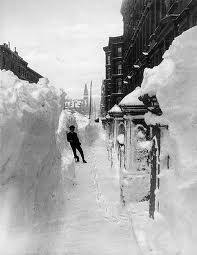
What really created my interest in What the Dead Leave Behind was the idea of Blizzard of 1888, and strangely,  I finished the book a few days before the prediction of the huge blizzard to hit New York and the east coast in mid-March of this year. 

Prudence McKenzie, still grieving over her father's recent death, awaits the arrival of her fiance as the blizzard sets in, covering New York in snow.  Charles, however, will never arrive and will be one of the 200 bodies discovered on New York streets in the aftermath of the storm.

Charles Linwood and Roscoe Conkling were out in the storm; Conkling made it to safety, but Charles' body was found after the storm.   

Prudence is devastated.  Her doctor had recommended laudanum to help Prudence deal with her father's death, but had issued strict instructions.  Now, Prudence is even more in the drug's clutches.

OK- there is a wicked stepmother and some dastardly deeds done, but Prudence does have some support in the characters of Roscoe Conkling and Charles Linwood's friend Geoffrey Hunter, a former Pinkerton Agent.

I assume this is to be a new series.  Although my main interest was the Great Blizzard, that part of the story is only at the beginning.


source

source

A Buried City: The Blizzard of 1888
The Great Blizzard of 1888  

NetGalley/Kensington Books

Historical Mystery.  April 25, 2017.  Print length:  304 pages.

Over the Hills and Far Away: The Life of Beatrix Potter

Over the Hills and Far Away by Matthew Dennison offers a glimpse into the life of Beatrix Potter, the beloved author and illustrator whose life was circumscribed by Victorian traditions and parents who kept her isolated from other children, whose inquiries into the natural world are worthy of any scientist, whose illustrated letters to children helped inspire the "little books" that are still beloved by millions, who was an astute businesswoman, and who bequeathed over 4,000 acres to the National Trust in an effort to preserve the English countryside.  

Potter was shy and under the thumb of her domineering parents, yet she defied her parents to fulfill her dream of becoming an artist.  

Much of the book was fascinating, but I found the shifts in chronology unsettling at times--since my version was a NetGalley manuscript, perhaps further editing has taken place.  Or maybe I should have adjusted better.  I also found the too frequent connections Dennison makes about her characters (those anthropomorphic and charming rabbits, mice, and ducks) to Potter's life overdone.

Nevertheless, Over the Hills reveals a great deal about Potter and her life, and I'm very happy to have learned about her family pets (lizards, birds, rabbits, hedgehogs, newts), her naturalist efforts, and her stubborn efforts to pursue her art.  

I would like to read another biography of Potter for comparison and because I'm still fascinated by the journey she made throughout her life.

Read in Jan.; blog post scheduled for 

NetGalley/Pegasus Books

Biography.  April 4, 2017.  Print length:  304 pages.