Search This Blog

Tuesday, October 31, 2006

Short stories, essays, novels, poems


I am not a fan of short stories. Until I read one. Not sure why this is, but I'm always reluctant to read anthologies of short stories even though I love their completeness and the ability to put the book down after reading just one. When choosing books, I always want those that have one narrative thread that pulls things together, and I'll pick up a bad novel before excellent short stories. When I do get involved with short stories, I always enjoy them, so this contradictory behavior sort of baffles me.

I love essays. Essays also offer the ability to read "just one" and not feel compelled to keep reading. Like short stories, they offer the opportunity to pause and digest. My favorite anthology of essays is still Lopate's The Art of the Personal Essay, but essays by one author are also fun as they offer a deeper insight and a broader view of the author's life, imagination, philosophy, and background. Why I not only tolerate, but love essays and don't feel the same desire for short stories is another puzzle.

I adore LONG books. If the book is really good and appeals to me, I don't want it to end; that is the beauty of trilogies, especially in fantasy. Robin Hobbs' set of 3 trilogies --The Farseer, Liveship Traders, and Tawny Man Trilogies (all well over 500 pages each) -- created another world and the 3 sets of 3 intertwined with certain characters woven, even if briefly, throughout all 9 books. Tolkien's Ring Trilogy is still my favorite, but after that comes Robin Hobbs' Farseer, Liveship, and Tawny Man tomes.

Poetry is necessary. Can't live without it. It is in my head even if I neglect reading it for long periods.

On another note entirely: I found this post about author quotes on other books (you know, "loved it" on back cover and the name of an author) on Another 52 Books and the link to this Jennifer Crusie's blog where she wrote about her experience -Confessions of a Reformed Quote Whore-with this (often dishonest) phenomenon. Great post!

Monday, October 30, 2006

October Reading - final update

French, Nicci. Beneath the Skin. Centering on the lives of three women, this suspenseful novel is divided into three segments, developing each character and relating the events involving a serial killer. I found the difference in personality and social status to be well done, French manages to keep the reader involved with each of the women as each in turn comes (unknowingly) in contact with the murderer. I will look for more by Nicci French.

Harris, Charlaine. Grave Sight. reviewed here

Connelly, Michael. City of Bones. A Harry Bosch mystery concerning the bones of a child recovered after 20+ years. What happened, who was this child, who was responsible? Harry goes through some significant events with a rookie, his superiors, and his own growing wavering commitment to his role in the system. Fast read, full of rippling effects resulting from an event that took place years earlier.

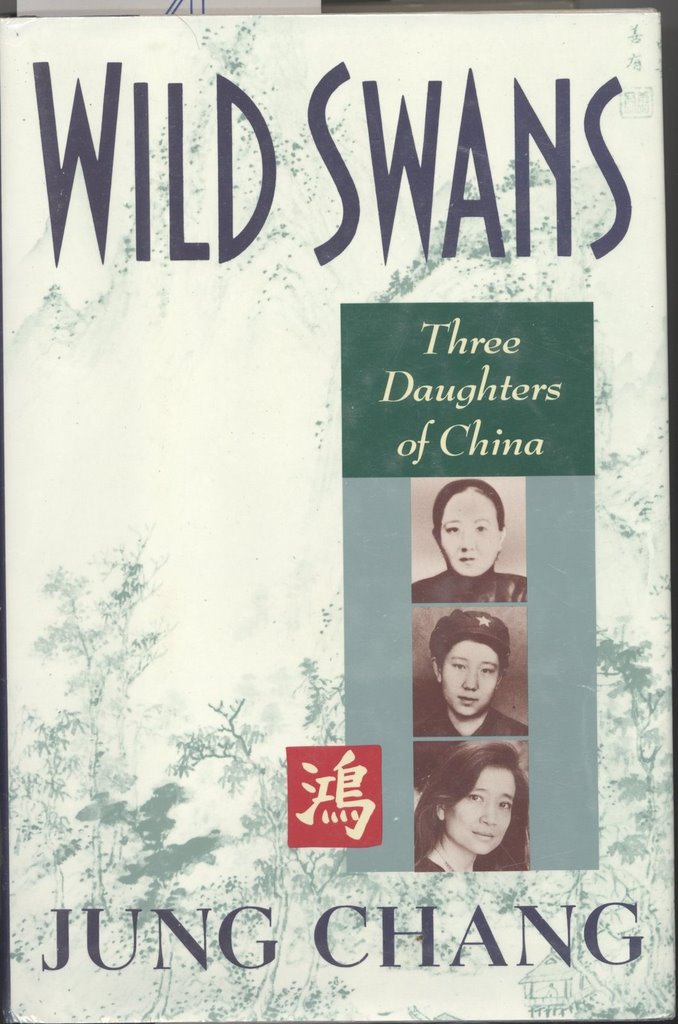
Chang, Jung. Wild Swans: Three Daughters of China. Jung Chang uses the lives of her grandmother, her mother, and herself to illustrate the changes that took place in China during the 20th century. Her grandmother, born in 1909, was a product of feudal China: her feet were bound, she was more or less traded to her first husband as a concubine, and she was essentially powerless in these circumstances. Chang's mother lived through the Japanese Occupation, the civil war between the Communists and the Kuomintang, and the Cultural Revolution. Jung Chang herself suffered through the Cultural Revolution, "Re-education," and the denunciation of her parents.

The book was enlightening, to say the least. Chang's style does not allow the story to become bogged down with the horror of various situations, but neither does she allow the reader avoid the realities of life in China during war, peacetime betrayals, and famine. I had to take frequent breaks from the tension. The corrupt officials, the abuse of power, the destructive policies of Chairman Mao--are all presented through the effects on the Chang family. Reading history in a general sense and reading history from the personal point of view of someone who has been there and experienced it all first-hand -- are significantly different experiences. Excellent book.


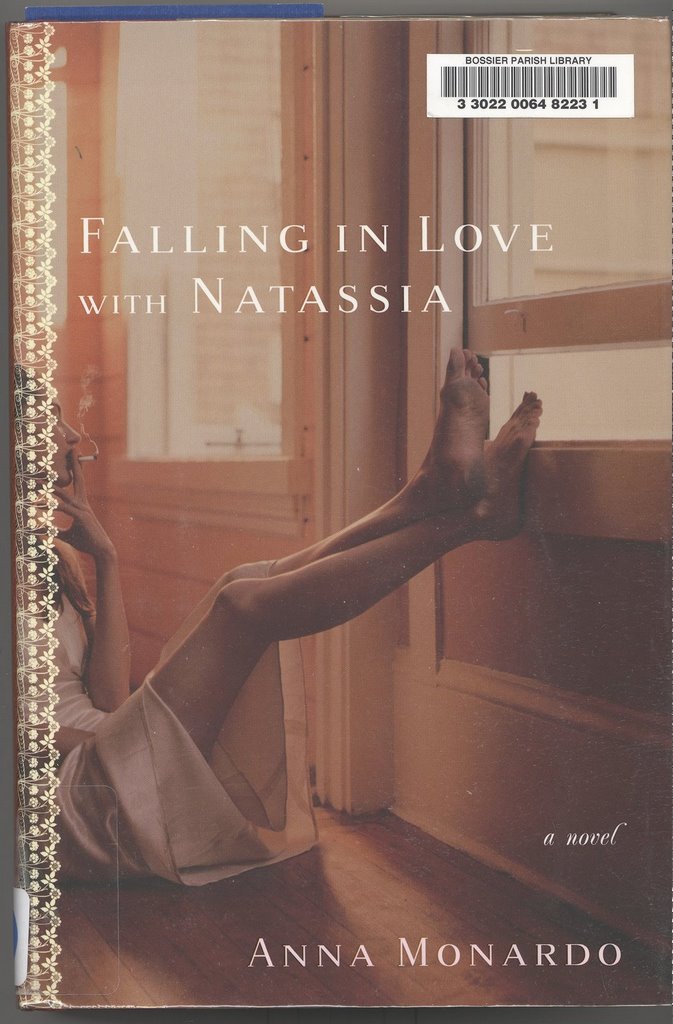
Monardo, Anna. Falling in Love with Natassia. I did not enjoy this novel. From the beginning, I was ambivalent, and at more than one point, considered just putting it aside. Then I'd get interested in the characters and their situations again. Then disgusted. Then interested. The interest, however, was always a distant kind of curiosity rather than a connection. The conclusion felt neither "concluded" nor open-ended. More like "this is as good a place as any to stop." Secrets are implied but never really uncovered. The last sentence in the first paragraph: "Years would pass before either of them would ever begin to understand why they had done this." Similar sentences occur throughout the first chapter. The first one was enough to catch your attention. The others were annoying. By the end, I really didn't care why they had "done this," knew more than I wanted to about the characters' backgrounds, and still had only a vague idea of why each character had behaved as he/she did. Psychological revelations aside.

Reichs, Kathy. Cross Bones. reviewed here.

King, Laurie. The Art of Detection. The first book I've read in the Kate Martinelli series (I've read several about 5 of the Mary Russell series), and ironically, this one is also connected to Sherlock Holmes. Martinelli, a San Francisco detective, investigates the murder of a Sherlockian devotee and collector. The story involves the discovery of a manuscript that may have been written by A. C. Doyle while on a trip to San Francisco in the 1920's.

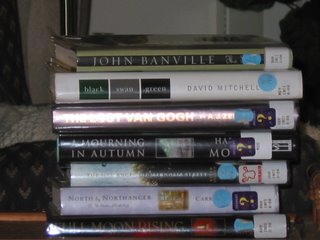
Mitchell, David. Black Swan Green. This is my favorite book so far this year. I loved Jason/ I loved his struggle through his tempestuous thirteenth year and alternately cheered him on or suffered the agony of adolescence with him. I loved his innocence, his willingness to believe fantastic stories, his desperate need to fit in and still be himself. Someone on the back cover compared the novel to Catcher in the Rye (the only similarity I see is that both are about adolescent boys); I think it is more like To Kill a Mockingbird in tone. It was also fun to chuckle about the references to 1980's language, styles, and music...and startling to see the political scene after a great distance.

Banville, John. The Sea. Reviewed here.

Zerries, A. J. The Lost Van Gogh. The reappearance of a Van Gogh plundered by a particular cruel SS officer in 1944 quickly results in the location of an heir. The painting is estimated to be worth $50 million, and various art houses show aggressive interest in the painting. Clay Ryder, the "art dective" with the NYPD, finds that the Mossad is also interested in the case and especially in the SS officer who stole the painting. The Lost Van Gogh is the first novel by this husband and wife team.

Sunday, October 29, 2006

When it rains...

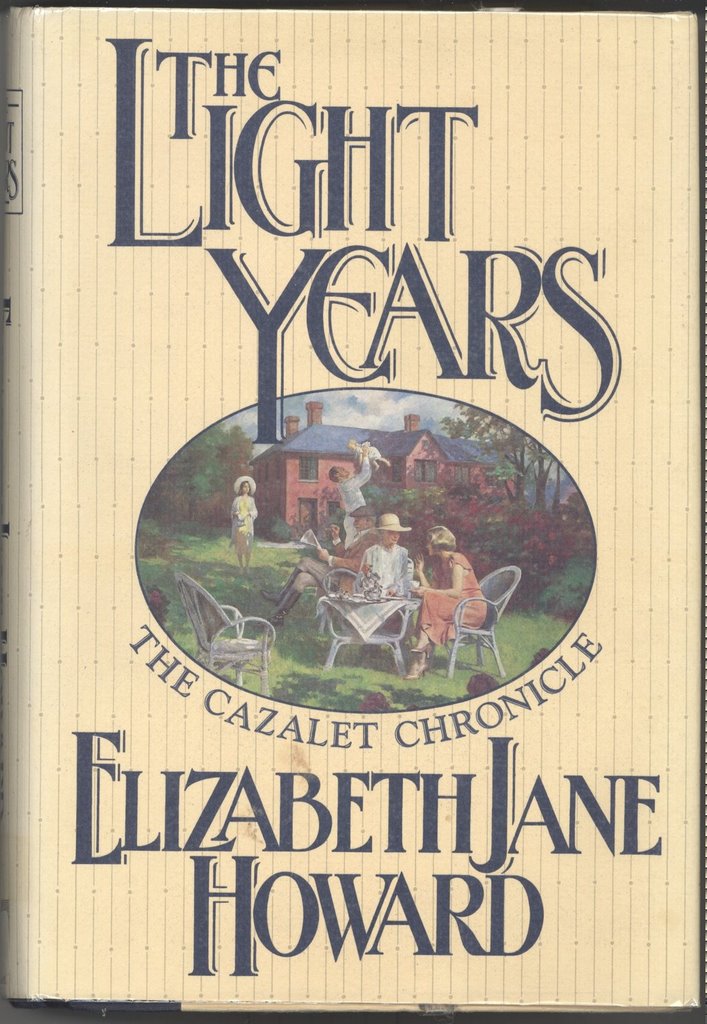
it pours in a nice way. Reading The Book Thief and The Light Years with several other excellent library books waiting. An Amazon order arrived yesterday, and two others are now on their way and should arrive in the next few days.

I'm feeling a little pressure with so many good books in progress and in the waiting to be read pile and more winging their way here. Almost too much of a good thing and too many decisions about what to read next.

Yesterday, there was little time for reading with errands, Tai Chi (great class yesterday), shopping, and K.K. and Jonathan's wedding (K.K. was a gorgeous bride! and Amelia was a beautiful bridesmaid in a slinky black dress - all the bridesmaids were in different black dresses - very effective). Today will be busy, too, but planning on some serious reading time tonight.

Friday, October 27, 2006

Book Festivals

The Louisiana Book Festival is this weekend in Baton Rouge. I held on to the two invitations I received for a couple of months before admitting that there really was no way I could attend as I was committed to a wedding (which I DO want to attend, just wish the two events were not conflicting). It would have been the perfect way to enjoy family and books as I could have stayed with Erin and played with the grandkids.

Booklogged, on the other hand, is going to make a Book Festival in Salt Lake City this weekend!


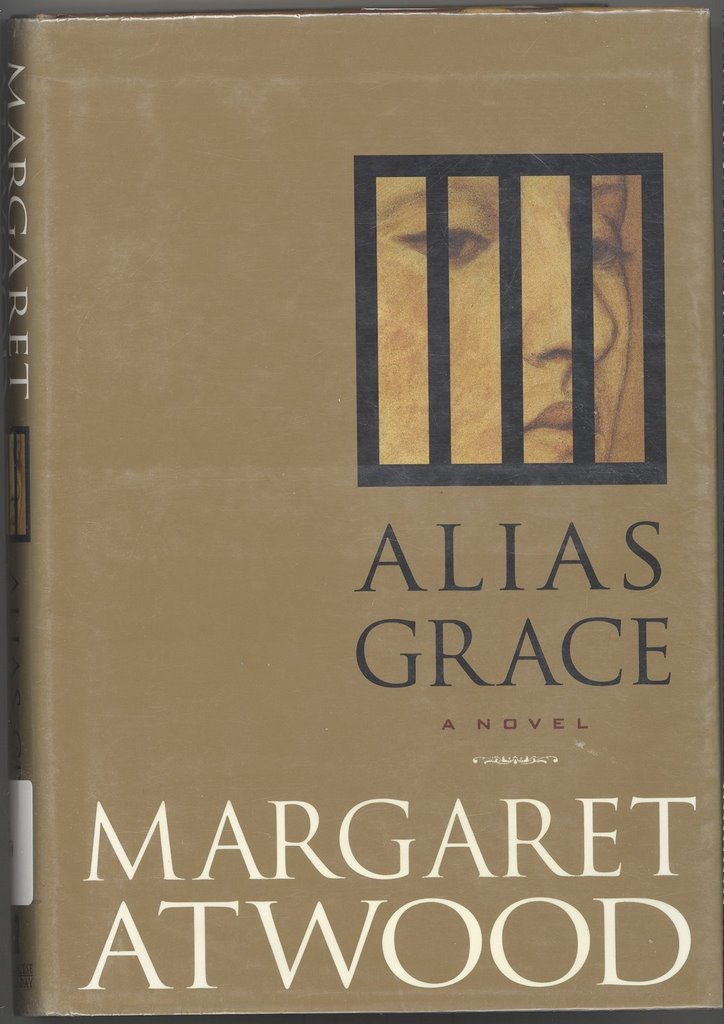
Finished Beneath the Skin and will look for other Nicci French books. Now reading The Light Years and The Book Thief. I have Atwood's Alias Grace and The Stolen Child on standby.

R.I.P. List and SciFi: Evolutionary Split?


Thanks to Carl for the entertaining R.I.P Challenge. I read some interesting books and have accumulated a long list of TBR titles from participating bloggers. I'm still waiting for about 5 more books that will go into the bonus R.I.P. category.


My R.I.P. list:

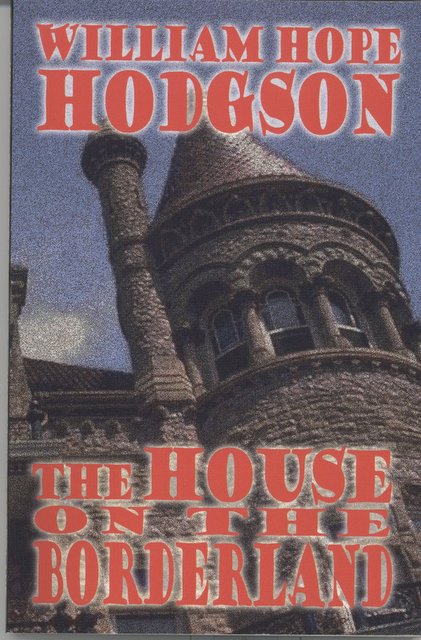
  1. House on the Borderlands - W.H. Hodgson

  2. Lolly Willowes - Sylvia Townsend

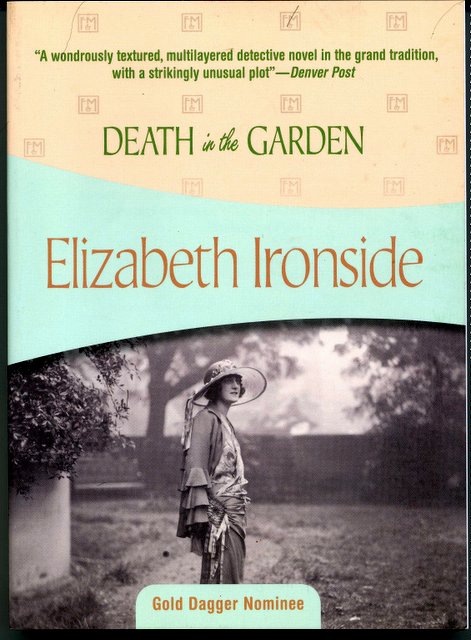
  3. Death in the Garden - Elizabeth Ironside

  4. The Wyvern Mystery - Sheridan LeFanu

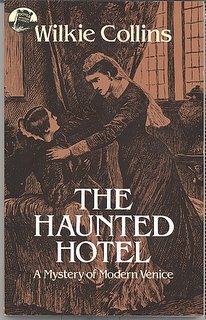
  5. The Haunted Hotel - Wilkie Collins

Only one of these authors (Wilkie Collins) had I read before, although LeFanu was one I kept saying I was "going to read" --someday. I think I learned something from all of them.

(favorites, by a long shot, #3 and #5; all have been reviewed somewhere on this blog)

Bonus R.I.P:

  1. The Keep - Jennifer Egan

  2. A Coldness in the Blood - Fred Saberhagen

  3. Grave Sight - Charlaine Harris

(favorite, #3)

Carl and Angela (and anyone else interested in science fiction), here is an article that could be developed into countless science fiction novels! Not that most of it hasn't been done before, but it provides a new impetus for futuristic novels.

Thursday, October 26, 2006

Winding down the Halloween Season and Noisy Nora

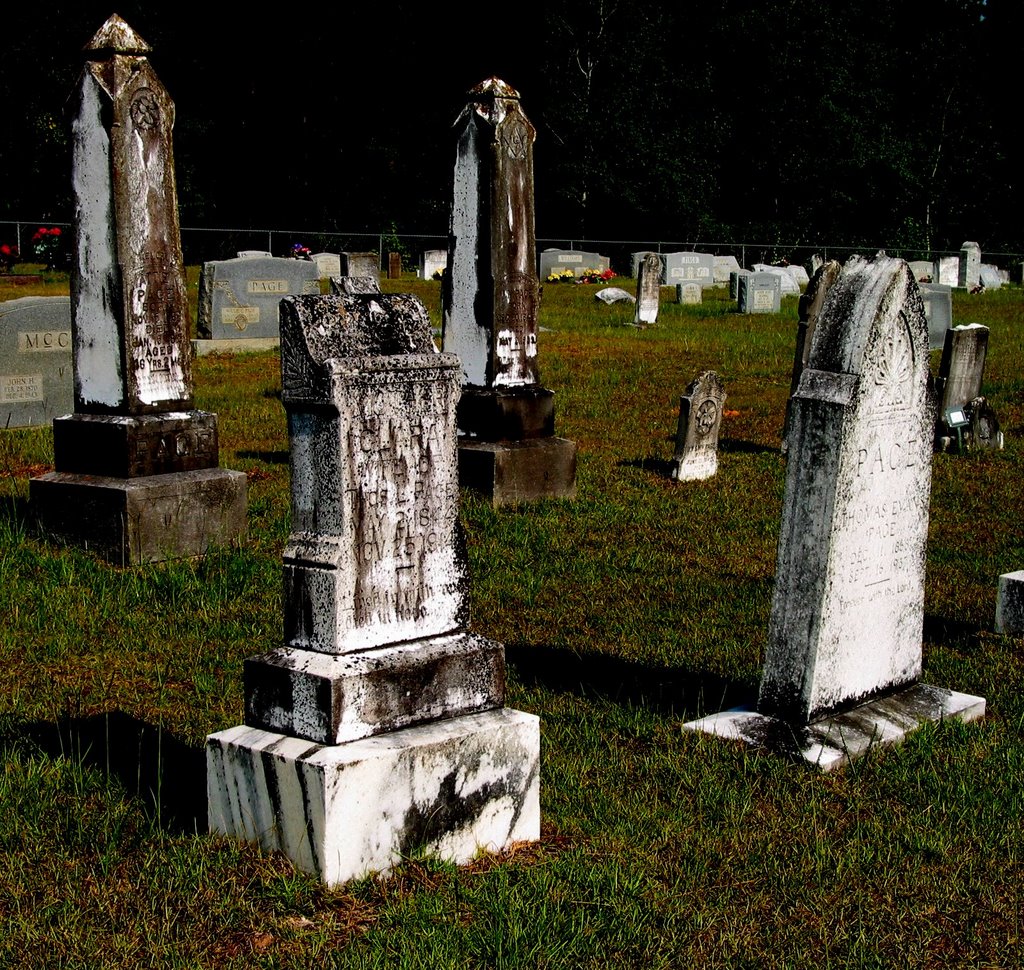
This is an altered photo of a scene in a very ordinary cemetery that I took not long ago. The original is a mundane photo of old monuments, but this version came out pretty spooky. Suits the season.


I'm currently reading Beneath the Skin by Nicci French. Suspense! I'm completely involved with the characters, but the suspense is intense. I wasn't familiar with Nicci French and found the recommendation at Reading Matters in her Favorite Beach Reads post.

I've also been reminded of a book that my children loved (and one of those special books that adults love reading to children every bit as much as the children love the book). Noisy Nora is an excellent book for young children. Thanks, Jay.

Wednesday, October 25, 2006

Two More Quick Mysteries

Finished two quick little mysteries. Michael Connelly's City of Bones, a Harry Bosch mystery, was quick and entertaining.
The other one, Grave Sight by Charlaine Harris, is about a character who "finds dead people." Struck by lightening when she was 15, Harper Connelly developed the ability to locate the dead. She and her step brother Tolliver Lang work for various police departments who have a missing person. Harris handles this pretty well, and I was easily able to "suspend disbelief" and enjoy the story. Very fast read. This was not actually the book I was looking for--Butterfly Books had posted an entry about the Sookie Stackhouse mysteries, but the library didn't have these, so I got the Harper Connelly one instead. Hate the cover and wouldn't have chosen the book if the author had not been on my list, but I did enjoy the book.


It was nice to have two quick and enjoyable bon-bons after the huge, sober, and disturbing books finished this weekend.

Piles of Books


Found this link on The Laughing Librarian and thought you would enjoy the many, many piles of books. I took a quick look, but will go back later and look for familiar names. Have any of you contributed pictures of your piles of books to this site?
I found this picture of my reading companion Mac in my "reading chair" with its required pile of books from last winter.

Monday, October 23, 2006

personal libraries

Jay Parini finds Other People's Books provide insight into their personalities: "What interests me about other people's books is the nature of their collection. A personal library is an X-ray of the owner's soul. It offers keys to a particular temperament, an intellectual disposition, a way of being in the world. Even how the books are arranged on the shelves deserves notice, even reflection. There is probably no such thing as complete chaos in such arrangements."

Received an email from Amazon a while ago, and my most recent order has been shipped. The order before that, the one from September 24, has not been shipped.

Oh, well, I'll get The Thirteenth Tale sooner than I'd hoped.
"From ghosties and ghoulies and long-legged beasties and things that go bump in the night, Good Lord Deliver Us."
Old Scottish Prayer

Finished!!


Finished Wild Swans on Saturday and Natassia on Sunday--991 pages combined. I reviewed them here in October Reading.

On to City of Bones by Michael Connelly.
****
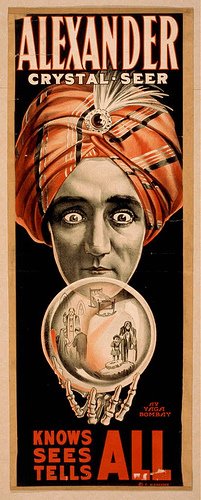
October is drawing to a close, so here is an old poster with a Halloween feeling. I've thoroughly enjoyed the R.I.P. reads and am eager to get my copies of The Woman in White, The Woman in Black, The Haunted Bookshop, and Parnassus on Wheels. That Amazon order should be here this week. I hope.

Sunday, October 22, 2006

funny links and other stuff

I know. I know. I've posted this link before; but...I just can't help it and want to be sure the rest of you have the opportunity to snort and snicker, too. It is Miss Information. Again.

And since I am being insensitive, I must note that John Mandeville has posted on Geoffrey Chaucer's blog. Oh, and just one more, Katherine de Swyneford has a new post. How can you resist a post titled "Constaunze is swych a bitche!" Of course, the conflict is an old one, but still...

I received my advanced edition of The Ravenscar Dynasty by Barbara Bradford yesterday. The title will be released on Amazon.com in December. I was gone all afternoon and checked the mail when I got home around 7:30 and found it. :)

Danielle and others received the same email...some accepted the offer. Danielle also posted a link to Isabella's blog for an entry about review etiquette. I like the Edwardian period and hope that I'll enjoy the book. I enjoy a wide variety of books so it shouldn't be a problem. The only other offer I had for a review copy was after I'd reviewed a book by the same author.

I now have a surfeit of books:
- a huge Robin Hobbs tome
-City of Bones by Michael Connolly
-The Ravenscar Dynasty
-about 8 books on order (mentioned in previous posts) and a few that have just been hanging around waiting for me (that makes a total of about 15 books either in a pile or on the way)

I've finished Wild Swans and Falling in Love with Natassia and will review them later, right now, I'm off to spend this beautiful afternoon with my husband.

Friday, October 20, 2006

RIP Craving, Prose, and Close Reading

I finished my RIP Challenge some time back, and have even completed some bonus books. The Gothic appeal, however, still has me in its grip, and I've books on order to continue the compulsion. Yesterday would have been the perfect day to indulge, but I didn't have a Gothicky thing at the moment (waiting on Amazon). Nevertheless, when I got home after lunch, I settled in for a couple of hours of comfort reading, cuddled up with dog, soft throw, and hot tea. Looking out the window, I'd think about how glad I was to be back inside and warm.


Most readers recognize different levels of skill on the part of an author: skill with language, with characterization, and with narration. But of course, all of it is achieved through language. If an author is especially good, I'll re-read sections for the pleasure of seeing a master at work. You do it, too, because in your blogs, you not only mention such passages but frequently quote them as illustration. Sometimes we take it a step further and analyze (almost subconsciously) the author's language techniques.

This morning, in reading book-blog, I discovered a review of Francine Prose's (pleasant irony) book Reading Like a Writer. I usually skip this kind of review because I'm not interested in becoming a writer. Kind of silly since I love books about "reading." In a good book about "writing," there is a confluence -- as writers are writing to be read, and as long as the book isn't a formulaic step-by-step-to-becoming-a-better-writer, there is a promise of learning how the author creates what the reader experiences.

Debra's review of Reading Like a Writer and the close reading technique appeals to me. How does Highsmith make a character like Ripley engaging? Read Debra's review (are there others of you who have read the book?), and you may end up adding another title to your TBR list. I did.

Wednesday, October 18, 2006

in progress... on order...of childhood

Falling in Love with Natassia: on page 216, almost half way through. I've had to get past a section that made me want to chunk this one, but things are better now. At almost half way, Natassia is not a major character, although she appears to be the inciting incident. I have no idea at this point what my final decision on this novel will be.

Wild Swans: on page 258, right at half way. The Changs have survived so much, but the Cultural Revolution is imminent, and I'm fearful. I was unaware of the famine in China that killed approximately 30 million people in 1958-1962. Chairman Mao's policies were both ridiculous and amazingly destructive, but disagreement of any kind was fatal. As Cheya and I have discussed, examining and comparing the lives the "three daughters of China" led in comparison to 3 generations of our own families is revealing.

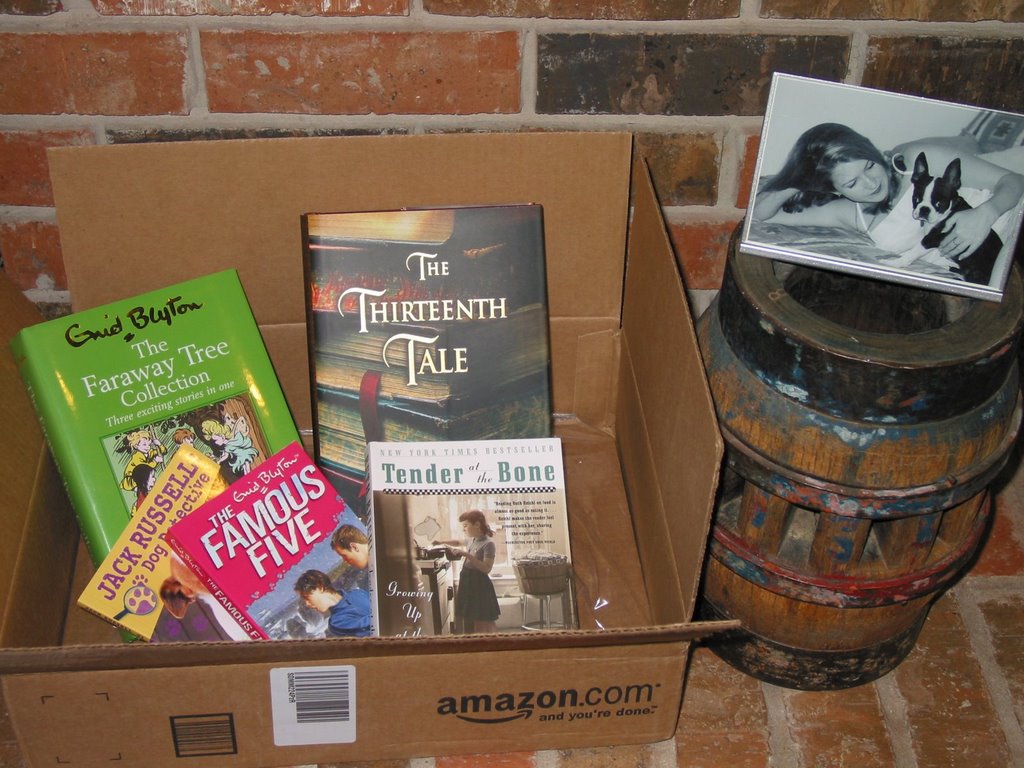
I've given up getting The Thirteenth Tale from the library and placed another Amazon order. Another mixed bag: Tender at the Bone - Ruth Reichl, The Thirteenth Tale - Diane Setterfield, Five on a Treasure Island - Enid Blyton, and The Faraway Tree Collection - Enid Blyton.

Last year on my other blog, I did several posts relating to children's books as a result of doing a Meme about them. I visited several sites that also completed Shelley's Meme and found that Enid Blyton's books called to me. Recently, I've read several mentions of Enid Blyton and the Famous Five

Other posts resulted from an article about what children should have read before finishing school with choices from J.K. Rowling, Philip Pullman, and Andrew Motion and just pondering the subject of children's books. As a result, I eventually ordered a set of L.M. Montgomery's Ann books which I started and stalled on this summer. Now, I'm pursuing Enid Blyton (the choice of many readers who did Shelley's Meme as well as showing up frequently in other places in the blog world).

Monday, October 16, 2006

How Important Is Your Library?

How important is your library? I found this link (where? sorry, I'm not sure where I found it) that lets you calculate your library's worth to you. Based on an average of 10 books per month, mine came to $150 - I suppose if you were paying to "rent" them during the course of a year. But to buy? My gosh, as I've told my husband and the librarians over and over - especially when paying a fine - the library is PRICELESS. So far this year, I've read 118 books...most of them from the library.

Finished Cross Bones. I liked the archaeological parts. Temperance Brennan and Ryan end up in Jerusalem trying to solve the mystery of bones found on Masada. Much of the book is based on facts about the Masada excavation - with a mystery created around an archaeological mystery. Has some DaVinci Code overtones, but although Reichs' interpretation is fiction, the dig (1963-1965 by Israeli archaeologist Yigael Yadin on Masada) and some other strange coincidences really occurred. The facts may be more interesting than the fiction.

Saturday, October 14, 2006

The Literary Traveler and more on Wild Swans

Wouldn't this be fun? A Literary Tour! I like the title of these two: Mystery and Manners in Savannah and Wigs and Words: Dickens' London.

An article about H.P. Lovecraft; one of many articles on the above site.

At first, Wild Swans was reading very quickly. Not that even in the beginning, you can avoid being grateful not to have lived in that time and place where women have little or no value. Now, however, the horror of events under the Japanese (although I've read much on this before) has slowed the reading down because contemplating what man can do to his fellow men can only be taken in small doses.

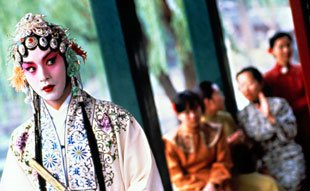
Although the Japanese Occupation was only a small part of this film, Farewell My Concubine is a fascinating look into the Peking Opera and the lives of two boys who also lived through this period and much of the chaos that followed with the Cultural Revolution. Informative and visually stunning. A friend from my Tai Chi class lends me Chinese movies, and I watched this one several months ago. Thanks again, J. L.

Friday, October 13, 2006

Referrals and recs

From checking other reading blogs, I've made a long list of books I would like to read. Here are some of them:

Frances Burney's Journals and Letters - Of Books and Bicycles
Angela Carter's The Magic Toy Shop - Aurora's Books
The China Garden by Liz Berry - Booklogged (Cheya didn't give it the highest marks, but I still want to read it- has a mythological bent)
Sixty Lights by Gail Jones - Reading Matters
Buzzbee's The Yellow-Lighted Book Shop - A Work in Progress

Currently reading:

Thursday, October 12, 2006

Delay

I've been quite frustrated by my latest Amazon order which didn't arrive and didn't arrive; checked on it and discovered I'd checked deliver all of them together. Evidently, at least one of the books was not immediately available. On order: The Woman in White by Wilkie Collins, The Haunted Bookshop and Parnassus on Wheels by Christopher Morley, and The Woman in Black by Susan Hill. They were supposed to be my bonus R.I.P. reads, but I may not get them in time for the October deadline. Not a huge problem as November is also a good month for Gothic...

Anyway, after a visit to The Library Ladder, I saw that my problem isn't unique.

Saturday, October 07, 2006

Reading Itineraries

While visiting Book Lust , I was reminded of the way we move from one book to another and started thinking about it.

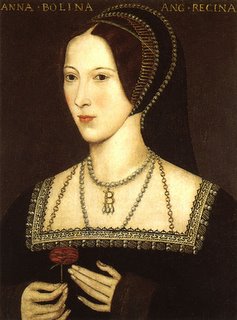
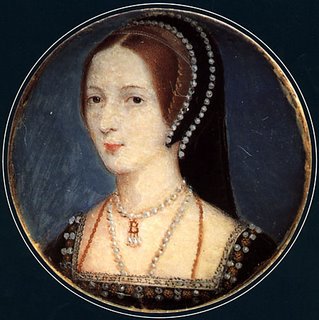
All readers talk about the surprising places one book can take them. I read Brief Gaudy Hour (one of Mother's Book of the Month choices - a novel about Anne Boyleyn) when I was in maybe the 5th or 6th grade. It led to many, many books about the Tudor family and about the time period-- both fiction and non-fiction, including Sir Walter Scott's Kenilworth (which led to many more of Scott's novels and a digressive path toward Vikings as well). Of course, other side trips along the way covered Elizabeth, Mary (Elizabeth's sister and Protestant Burner), Lady Jane Grey (tears for this poor, brief queen), Mary (Elizabeth's cousin and Queen of Scotland) and more. Most recently, mystery series by Fiona Buckley, Kathy Lynn Emerson, Karen Harper, Simon Hawke, and Edward Marston and the excellent non-fiction, The Wives of Henry VIII by Antonia Fraser.

I love Book Lust's idea of charting the paths reading can lead a reader down; branching out and out and taking you in directions that can't necessarily be predicted. Any good book can take you to other books by the same author, to books on the same subject, and to any interesting detail that you notice in the book.

What are some of the books that have taken you on unexpected journeys? If you decide to creat a book itinerary, please leave me a comment. I'd love to see some of the journeys you've taken.


The paintings of Anne Boleyn come from The Anne Boleyn Gallery.

Finished Black Swan Green - my favorite book this year!

Friday, October 06, 2006

Another Chinese Detective...

Those of you who were interested in Qiu Xiaolong's mysteries might also enjoy Eliot Pattison's novels The Skull Mantra, Bone Mountain, and Water Touching Stone which are excellent. A former Chinese investigator who looked too closely at situations he should have overlooked in Beijing has been exiled to a "gulag" in Tibet where he becomes influenced by the Buddhist Monks who are also imprisoned and condemned to a labor force. For Shan Tao Yun, watching the Buddhist monks leads to a search for a higher morality. These novels are long and involved, the characters are well-developed, the situations tense, sometimes horrifying, and based on the oppression of native peoples in Tibet as China attempts to eliminate cultural differences and religious beliefs.

Thursday, October 05, 2006

When Red Is Black

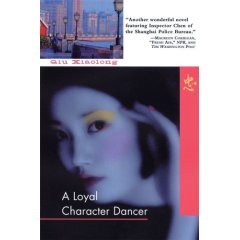
I've read and enjoyed Qiu Xiaolong's novels, and I think he has a new one out that I haven't read yet. Recently an NPR interview with Qiu says that his novels "are gaining a faithful following, as much for their whodunit storylines as for their portrait of China in transition."

Another excerpt from the interview:

"Qiu's hero, the poetry-loving Chief Inspector Chen, pounds the pavement as he pursues murderers, triad members and corrupt officials.
Qiu is an accidental writer of thrillers. He originally made a name for himself translating T.S. Eliot's poetry and William Faulkner's novels. When he started writing his first Inspector Chen book, he didn't even realize he was writing a mystery until he'd finished."


His intention was to write a novel about contemporary China, a China in transition, and he certainly did, but the novel turned into a mystery with a detective who is caught in the midst of the changing attitudes. Qiu's own father was a victim of his own success when the Cultural Revolution was in full swing; now China celebrates business success. An irony that is not lost on Qiu who now lives in St. Louis, but who regularly visits Shanghai.

These mysteries are revealing and frightening. I simply cannot imagine the mental dexterity required in dealing with the changing political attitudes that China has undergone.

Wednesday, October 04, 2006

Librarian Costume


Librarian Avengers lets us know that Target sells these "incredibly accurate" Halloween costumes for only $59.99!

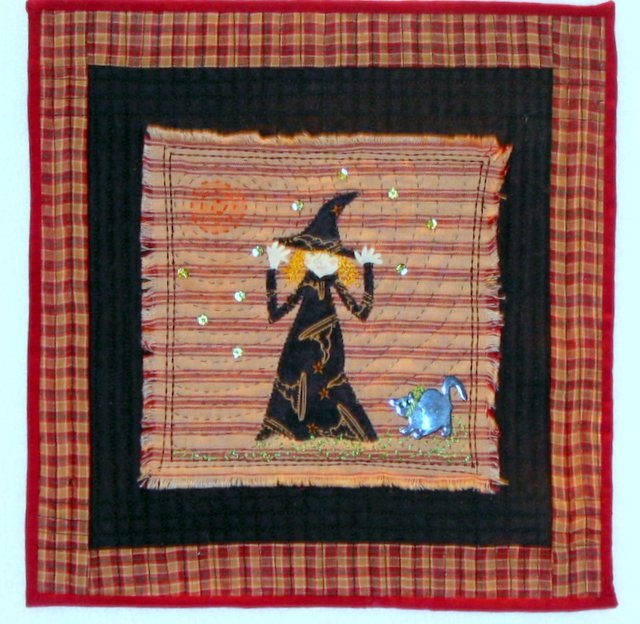
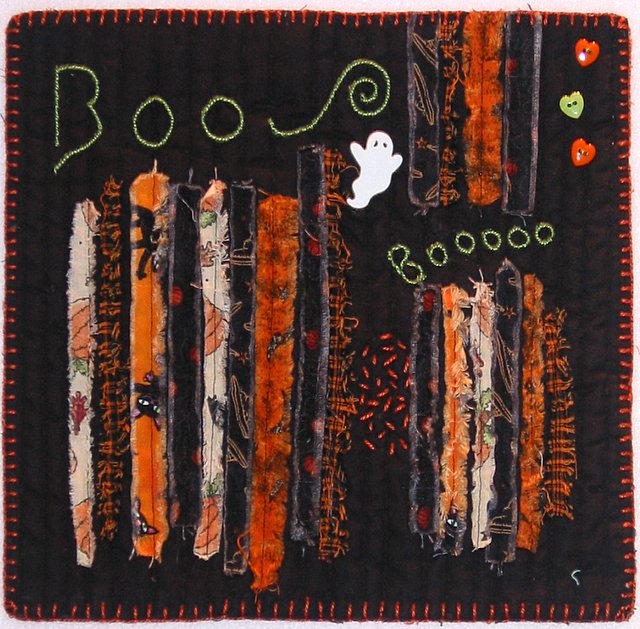
I didn't like Ghostwritten by David Mitchell; in fact, after reading over 3/4 of the book , when my 2 week library time was up, I returned it without regret. When I started reading blog entries about Black Swan Green, I shrugged and thought, "Nope, not for me." However, the entries in various blogs sounded as if BSG was a completely different style from Ghostwritten, and when it showed up on the library shelf the other day, I cautiously included it in my bag. I began reading last night after finishing The Sea by Banville, and found myself immediately captured by Jason and his world. I didn't get a chance to read tonight, because I was watching Netflix and finishing up another Halloween quilt, but I'm looking forward to continuing tomorrow.

Tuesday, October 03, 2006

he must go down to the sea again... (updated)

Started reading Banville's The Sea last night. His prose is beautiful (I've jotted the page numbers of somany pages where a sentence or a paragraph seemed so absolutely right), but this kind of remembrance and self-examination is usually a tool leading to an unpleasant revelation of some kind. So I can read for 15-20 minutes before the tension gets the better of me, and I put it down for awhile. I remember Danielle saying that Max Mordent was not a particularly likable character and several passages of his childhood behaviors do give pause. Are they foreshadowing of some kind? Thinking about his name - Mordent - I went from morbid to mordant. A mordant is a fixative when dyeing cloth, and as many quilters dye their own cloth these days, I hear it frequently. But mordant can also mean critical or caustic.

The attention to detail is remarkable and beautifully recorded. I should pull passages to quote, but the visual image Banville created of the picnic is so vivid and complete that it will probably remain as the most memorable portion of the book for me. Since the book is so short, I should finish tonight if I can force myself to read the last little bit. At this point, all of the characters are ghosts in several senses of the word.

---
I did finish. And was surprised and not surprised. The writing is marvelous, Banville's language often a joy, but caring about any of the characters was difficult. I will go back over some passages before returning the book to the library, just to read some of those sentences once again, but although I sympathized with Max at times, not one character claimed much emotional attachment.

More on censorship

Well, sometimes I'm not fully informed. Here is another article about the opera Indemeneo. Kimball is also unhappy about the cancellation of the opera, but evidently this production has little left of Mozart's version.

Here is an excerpt from the article:

Poor Mozart. Mr. Neuenfels is one of those directors more interested in nurturing his own pathologies than in offering a faithful presentation of the geniuses with whose work he has been entrusted.

In the best of all possible worlds, we wouldn't be treated to such artistic desecrations. But in this world, such productions are business as usual. And Deutsche Oper's decision to cancel the production because some Muslims might not like it is both craven and shortsighted.
Not, I hasten to add, that Deutsche Oper was wrong in its calculation that the opera will offend those Muslims who are eagerly waiting to be offended.


Read the entire article. It is excellent and raises the questions we need to be asking ourselves about censorship and self-censorship. While Kimball finds this version of the opera offensive (another subject worthy of discussion), he also contemplates the cost of freedom and freedom of speech.

Sunday, October 01, 2006

Forgery and Censorship

Finished The Lambs of London Friday afternoon and found it interesting. Not what I expected, but interesting. I was not familiar with William Henry Ireland, but from the beginning was making connections with Thomas Chatterton, whose name eventually came up in the novel. Since I've loved Charles Lamb's essays for a number of years, I was disappointed that his character in the novel becomes something of a foil and not a particularly charming one. Ireland, with his discoveries, proves the most interesting character (surprisingly, more interesting than Mary) . As I mentioned in an earlier post, Ireland went on to write Gothic novels which fits in nicely with the October Gothic-ness many of us have been enjoying.

Finished North by Northanger (a Mr. and Mrs. Darcy mystery) by Carrie Bebris and found it charming. Bebris develops characters that retain the flavor of Austen's originals in a more economical style and in the less formal setting of a newly married couple. A light read that provides a little extension into the lives of the Darcys and their associates. Another bit of Gothic connection since Austen's Northanger Abbey was meant to parody Ann Radcliffe's The Mysteries of Udolpho.

On another note, the opera Idomeneo (music by Mozart) has been cancelled in Munich because of one scene. That. Might. Offend. And create a security threat. The opera has been performed countless times all over the world since its premiere in 1781. Now, I have to wonder if it will ever be performed again... I am offended by this censorship (even though I can certainly understand the fear of repercussions) and have to wonder where it will lead.

Saturday, September 30, 2006

One Thing Leads to Another

I've spent a delightful several days with our eldest daughter and our grandchildren. I have been reading this week, but most of what I've read has had illustrations...wonderful illustrations in many cases. Judgements have been made once again on the quality of various books: Clarice Bean is a poor knock-off of the ever charming and sharply funny Eloise. Not only is C.B. a poor imitation, it is (at times) mean-spirited. Olivia by Ian Falconer also takes Eloise as a model, but is sweet and funny and for a younger audience. C.B. might appeal to those who have never had the pleasure of meeting Eloise, but I think the book's popularity is mainly driven by hype.

Speaking of hype...in a better way. Carl recently mentioned the influence of blogs on book sales and posted a link to this article that reveals a remarkable increase in sales for The Thirteenth Tale in the U.S. as a result of blog recommendations. Also, many of us involved in the R.I.P. challenge have ordered and posted about Gothic novels. I've noticed comments on non-book blogs lately mentioning or referring to Dracula, The Woman in White, and other novels in this genre. Some of these comments are, no doubt, a direct result of R.I.P. readers posting about their current reading.

I finished The Wyvern Mystery and have drafted a review which I will hold on to until I see some other reviews on the title. Now, I'm nearly finished with The Lamb's of London, a strange little book, and have not yet determined my opinion. Fact and fiction are intermingled here and I'm carefully watching Mary's behavior. Also interesting is that (synchronicity at work again) William Ireland wrote several Gothic novels: The Abbess: A Romance; Rimauldo: Or, The Castle of Badajos; and Gondez the Monk: A Romance of the Thirteenth Century.

I'm really behind in my own blog reading (and novel reading) and trying to catch up.

Wednesday, September 27, 2006

Visitors and Books

Erin, Mila, and Max are here for a few days. :)

I have a stack of library books to get through and books on the way from Amazon. Have almost finished The Wyvern Mystery, and eager to start some of my library books. Have already started
The Lambs of London by Peter Ackroyd, a fictional look at Charles and Mary Lamb. I've always loved Lamb's essays, so this one practically jumped into my hands. However, most reading will be suspended for a few days while I gloat over grandchildren.

Monday, September 25, 2006

Bonus R.I.P.

Still reading my last R.I.P. challenge, The Wyvern Mystery, and it has gotten better.

Went to the library Saturday afternoon and got (among other books) A Coldness in the Blood, a modern Dracula version. Lurid cover, don't you think? It was a quick read, but not that great. Saberhagen is a PROLIFIC writer, and this is the 8th in this series (he has 4 different series, as well as some that are classified as "other"). I may look for the first in the series because it was a quick read and the earlier ones sound better.

Sunday, September 24, 2006

Black and White and Read All Over

I'm going to have to keep a list of where I find new possibilities. I visit so many blogs, write down prospective titles, and later don't remember where I found that particular title. At any rate, I just ordered several books:

The Woman in Black by Susan Hill and since I've seen it reviewed on several blogs, I'm eagerly awaiting its arrival.

The Woman in White by Wilkie Collins, which I've read before, but so many years ago, I only remember that I like it. Makes a nice contrast to the Susan Hill novel, eh?

Parnassus on Wheels and The Haunted Bookshop by Christopher Morley, and I don't remember who had these on her R.I.P. list.

Friday, September 22, 2006

A Map of Glass - Jane Urquhart

"He is an older man walking in winter. And he knows this. There is white everywhere and a peculiar, almost acidic smell that those who have passed through childhood in a northern country associate with new, freshly fallen snow. He recognizes the smell but cannot bring to mind the word acidic. Snow, walking, and winter are the best he can come up with..."

"It might have been more than an hour ago that he remembered, and then forgot, the word island. But even now, even thoughtthe word for island has gone, he believes he is walking toward a known place."

This is a novel about ecology. The relationship of man and place, the topography of a landscape, the result that occurs when an aspect of the landscape is destroyed through the gradual and residual effects of greed.

It is a novel of memory. The mining of memory for nuggets of joy or understanding, the turning from and denial of memory, the relentless loss of memory through disease.

The three main characters in the first and last sections are each concerned with landscape and changes in landscape, the structures man creates, the abandonment and decay of structures...but each approaches the landscape from a different perspective. Artist, historian, lover.

And all three are involved in the various aspects of memory, again from different perspectives, but at least two of the perspectives begin to merge and encompass each other, breaking out of their original strictures.

The middle section is a history - of place and of family - told through the journals of Andrew Woodman. This is the section that most reviews have called the heart of the novel, and it is interesting and important because Andrew's journals contain the stories of several generations.

For me, however, the first and last sections were equally, perhaps more, important ...because of the emphasis on the different aspects of memory and because of Andrew's loss of memory.

The book is not a fast read. I don't think the novel should be rushed, nor do I think it will appeal to everyone, but it is a timely novel for me. I will be looking for Urquhart's other novels.

(Jerome, the conceptual artist, has great admiration for Robert Smithson's Map of Glass)

Old Dark Houses and Sheridan Le Fanu

Finished A Map of Glass and liked it very much. Will review it later when I have more time. Have been a bit overwhelmed lately and very tired.

Started The Wyvern Mystery by Le Fanu, but although it initially looked to be a fast-moving read, things have definitely slowed down. The Aussie's made the movie in 1999 and PBS has a version.

Old Dark Houses is an essay that discusses the "old dark house genre" to which the novel belongs. An excellent essay for lovers of Gothic that takes you from earlier "old dark house" versions to more current ones. I love the conclusion:

Even after some 150 years, you can still find mysteries that echo back to the days of Sheridan Le Fanu and The Wyvern Mystery. By now, though, you'd think young women would know enough to stay away from houses with names.

Some people never learn! Fortunately for those of us who enjoy the genre...

Wednesday, September 20, 2006

Name Game

How important are names in life and literature?

Movies influence so much in popular culture, but books do as well. This is an interesting post about a passage in F. Scott Fitzgerald's The Beautiful and the Damned and popular choices in children's names.

I've noticed more and more young people turning to old-fashioned names and the article mentioned Sophie and Max. My new grandson is named Max (after his great uncle) and friends of Erin and Eric have a little girl named Sophie.

I especially like animals named for characters in books - or even animals in books - Laura in Lolly Willowes names her cat Vinegar,and a friend in New Orleans years ago had two kittens named Rosencrantz and Guildenstern.

A literary trick that I enjoy is giving characters names that relate to their character, situation, behavior, etc. Dickens did this in a very obvious manner, and we certainly tend to remember these characters. Other authors are more subtle, and only after getting to know the character do we realize how much the name reveals.

Who are some literary characters whose names have made it into popular culture? Who knows animals who have a literary connection? What examples of literary names can you think of that have the Dicken's "twist"?

Monday, September 18, 2006

R.I.P. #4 The Haunted Hotel


First published in 1879 in Belgravia Magazine, The Haunted Hotel: A Mystery of Modern Venice is set in 1860. At only 127 pages, the blurb says it is "perhaps [Collins'] last lucid effort (before ill health and opium drained his powers)." It is a fast-paced little novel that may have been based on an actual French crime. Collins' version has a mysterious countess, a murder, a secret room, a dungeon converted to a chemistry lab, a ghost, and a love story.

Definitely not a feminist novel, both the heroine and the villainess ask forgiveness for their feminine frailties on more than one occasion. Although Collins may really have intended to create frail and sensitive women, both the heroine and villainess exhibit a good deal more strength of will than do their male counterparts, they just make sure to request patience with the weaknesses of their gender. A good book for a "dark and stormy night." Gothic and Victorian and fun.

I had no idea when I chose my books that 3 of them would be so short.
The Le Fanu novel is longer, I think. Having so many that are such quick reads means I can start considering which "bonus" books to read in the R.I.P. vein.

Interesting posts & links; A Map of Glass


A review of the book Artist of Wonderland: The Life, Political Cartoons, and Illustrations of Tenniel arouses my interest.

Bibliotherapy...great post that introduces a cure for so many things. Seems to have worked for SoManyBooks.

Dorothy W. commenting about Courtney's post on review styles. When do reviews get too scholarly?

This link (BBC) is full of fascinating stuff about books, poetry, and a project called "Telling Lives."

I am still so in love with A Map of Glass by Jane Urquhart. What lovely prose, what a fascinating journey into the lives of the characters. I read it slowly-- almost like nonfiction-- because, unlike many books where the plot encourages rapid reading, Urquhart's sentences and paragraphs slow me down and encourage me to ponder characters, settings, history, memory. I find myself wanting to linger, not rush to a conclusion.

Will finish The Haunted Hotel by Wilkie Collins today. Really more of a long short story or novella than a full length novel. All the important Gothic elements here AND a Gothic sensibility. Fun, fast reading.

Sunday, September 17, 2006

September Reading

Ackroyd, Peter. The Lambs of London. Interesting, although the novel changes (without sufficient reason in at least one instance) some historical facts. The "discovery" of Shakesperian artifacts and a never-before published play provide the basis of this story. Described as a "romp," the novel has little to do with humor.

LeFanu, J. Sheridan. The Wyvern Mystery. First published in 1869. Neither spooky nor suspenseful. Characters are not sympathetic. Drags. The Brontes and Wilkie Collins offer much more, but Le Fanu was tremendously popular in his own time period. Uncle Silas and Carmilla may be better examples of his ability.

Ironside, Elizabeth. Death in the Garden. Review is here.

Warner, Sylvia Townsend. Lolly Willowes. My review is here.

Meltzer, Brad. The First Counsel. Not impressed with the writing, the characters, or the plot.

Hodgson, William Hope. The House on the Borderland. I reviewed this here.

Marrs, Suzanne. Eudora Welty: A Biography. I ended up really appreciating this biography, warts and all. Although thoroughly researched and documented, the biography is terribly uneven. It could have been cut to half the length (the "datebook effect") and would have been much more entertaining and still informative. Eudora's close friends included Elizabeth Bowen, Katherine Ann Porter, Reynolds Price, V. S. Pritchett, Robert Penn Warren; she was acquainted with nearly everyone on the writing scene from the 1940's forward... Cleanth Brooks, Ann Tyler, Truman Capote, William Faulkner, S. J. Perlman, and on and on. Even in her closest relationships, however, little is revealed. This may change when certain letters that were sealed in her Will are made available in 2021.

What is revealed is that Welty was not the sheltered, stay-at-home spinster that some have thought. She was widely traveled (an exhausting travel schedule), interested in all areas of the arts, and a generous friend and mentor. I especially enjoyed her lectures and literary criticism.

Awards: Pulitzer Prize, the National Book Award, eight O. Henry Awards, the National Medal of Literature, and the Medal of Freedom. She recieved 39 Honorary Degrees from various colleges and universities.

She loved two men, but never married. Her first love, John Robinson, vacillated between courtship and distance until realizing/admitting he preferred men. Her second love, Ken Millar (Ross MacDonald) was married. Their relationship was very strong, despite being conducted mostly in letters of deep friendship.

Near the end of her life, Eudora tells of a letter from an old friend: "She said, 'I'm 90 years old now, and I feel like there's somebody else living inside my skin and not a friend.' I loved that! Isn't that wonderful? I know what she means. I understand. I guess she feels her body is not obeying her. She didn't mean an enemy but not a friend.

Walters, Minnette. The Devil's Feather. Strangely, although the subject matter is as dark as usual, the novel didn't seem as dark as most Walters' novels. Connie Burns is a war correspondent who makes connections about the brutal murders of five women in Sierra Leone, and the appearance of a frightening mercenary who appears later in Baghdad. Her suspicions and inquiries lead to several invasions of her hotel room. Frightened she decides to leave Baghdad, but is kidnapped on her way to the airport and held captive for three days. On release, Connie refuses to talk and returns to England damaged and seeking seclusion.
Eventually, she rents a house in a remote area where, as she regains some stability, she begins researching the suspected murderer again...
An engrossing read that I found difficult to put down.

Thurlo, David and Aimee. Prey for a Miracle. Quick little mystery about a former journalist, now a nun, who solves mysteries. Sister Agatha is an extern nun who helps protect eight-year-old Natalie whose mother had been forced off the road and badly injured. Natalie manages to escape before the attacker can catch her. Another motorist arrives on the scene and the attacker escapes. Natalie claims she has a guardian angel, and Agatha's convent provides shelter until the villain can be identified and caught. Not much to it, but a fast read.

more on science fiction

After looking over the science fiction list posted below, I've been thinking about The Ship Who Sang by Anne McCaffrey which I read probably 15 years ago. It belongs in the science fiction genre, although many of McCaffrey's works are fantasy.

Here are the first few paragraphs from the short story McCaffrey later developed into the novel:

She was born a thing and as such would be condemned if she failed to pass the encephalograph test required of all newborn babies. There was always the possibility that though the limbs were twisted, the mind was not; that though the ears would hear only dimly, the eyes see vaguely, the mind behind them was receptive and alert.
The electro-encephalogram was entirely favorable, unexpectedly so, and the news was brought to the waiting, grieving parents. There was the final, harsh decision: to give their child euthanasia or permit it to become an encapsulated "brain," a guiding mechanism in any one of a number of curious professions. As such, their offspring would suffer no pain, live a comfortable existence in a metal shell for several centuries, performing unusual service to Central Worlds.


She lived and was given a name, Helva... More here

Helva becomes a "brain ship" (those who have read Robin Hobbs' Live Ship Traders trilogy will note some similarities); Helva is a space ship whose brain manages all details of flight and operation, an advanced and human instrument with "the voice of an angel."

I'm about to abandon Golden Boy since I will only read a few pages at a time. I'm really enjoying the beautifully written A Map of Glass.

Friday, September 15, 2006

R.I.P. # 3 Death in the Garden

Posted by Picasa
Elizabeth Ironside's Death in the Garden was a pleasure to read. Danielle, didn't you read this earlier this year? I really enjoyed Ironside's prose, and the two narratives, one in 1925 and one in current time.

Interesting that there are some similarities here with Lolly Willowes. The idea of a woman's place being at home in servitude to house and home and a self-righteous, domineering male are present in both. The differences in the novels are huge, for example, Laura's brother is domineering and conventional, but not in any way violent or verbally abuse as is George Pollexfen when crossed.

George's view that his wife should not have a career provides a catalyst for Death in the Garden.The story opens with Diana Pollexfen's unexpected acquittal of her husband's murder. No one is more surprised than she.... The story then quickly moves to the days preceding George Pollexfen's death and the arrival of various friend's for Diana's birthday.

Part III introduces Helena, a London solicitor, and her life in contemporary London. When her Great-Aunt Fox dies, Helena must go to Inglethorpe where she discovers that 67 years ago, her Great-aunt had been accused of the murder of her husband. When Helena realizes that she has inherited Inglethorpe, she decides she needs to know whether or not her Great-aunt was really guilty. Reading old journals, Helen realizes that she knows very little about her Aunt's life and sets about learning more in the hopes of proving her innocent.

Helen's life has its own complications that need to be resolved, but she is committed to her project, and aided by her cousin Simon and his wife Marta, she begins unraveling relationships in the past.

She often does not know what to make of the journals: "...as she read the extracts from different decades, Helena could not decide whether she was reading an honest account meant for no eyes but the writer's, a work of fiction, or a self-deception. Did anyone keep a diary meaning no one else to read it? She doubted it. It might be written as therapy, a means of objectifying one's life for one's self, but the act of writing, however secret, implied a reader, known or unknown, one day, sooner or later" (213).

Elizabeth Ironside (Lady Catherine Manning) is an author I want to read again, although I may have to search to find copies of her earlier books.
Here is a link to an interview on American University Radio. The interviewer's voice is ... well, annoying.

Interesting List

List of books for feminist science fiction, fantasy

I had only read 5 from that long list:


Octavia Butler. Wild Seed.
Leonora Carrington. The Hearing Trumpet
Charlotte Perkins Gilman. "The Yellow Wallpaper"
Mary Shelley. Frankenstein
Sylvia Townsend Warner. Lolly Willowes, or, The Loving Huntsman (1925)

A number of the titles listed sounded quite interesting, a few were familiar, but most were absolutely new to me.

Wednesday, September 13, 2006

the keep

I'm evidently one of the few unimpressed by Jennifer Egan's The Keep. The style has been compared to Chuck Pahlahniuk's, and perhaps that is a key; certainly not one of my favorite styles. A few gothic elements do not a real Gothic Novel make, she said disappointedly. Obviously, the novel did have an influence, she said wryly.

There are elements I like:
  • the incident that changes life for Howard and Danny, sending them in separate directions. The "loser" becomes a winner and the "winner" becomes a loser, trying to forget the role he played and punishing himself. This psychological twist is interesting and believable.
  • the Gothic elements that are (as it turns out) only partially developed. There are scenes, incidents, characters in this portion that aroused my interest, but were never fully fleshed.
  • the story within the story, as Ray writes the story of Danny and Howard is a good concept, I think. I t has an intriguing aspect as the reader debates the role Ray plays/played.

But overall, the novel wasn't satisfying and was often annoying. When quotations marks and tags are deleted and more than two voices are taking part, the narrative is slowed down. Egan has received some acclaim for breaking rules, I just don't feel that the rules she breaks (for example, the dialogue) are beneficial, stimulating, or thought provoking.

Close to the end, my interest mounted, but I still felt dissatisfied. And then there was another ending...

Tuesday, September 12, 2006

The Loving Huntsman (or "a room of her own")

Interesting tid bit:
1926 - The Book-of-the-Month Club in New York City chose as its first selection, "Lolly Willowes" or "The Loving Huntsman" by Sylvia Townsend as the offering to its 4,750 members.

I didn't realize that the Book-of-the-Month club started in 1926. Wonder how many members it has now, 80 years later...

Finished Lolly Willowes, a strange little book; another short one -- only 222 pages. Approximately the first 100 pages cover LauraWillowe's life as first daughter, living at home until nearly 30, then maiden aunt, living in the small spare room in her brother's home.

At home with her father, Laura is content with reading and botany and her father's brewery. She is interested in neither marriage nor an active social life. Her life is not exciting, but pleasant.

On the death of her father, Laura finds herself taken over by her elder brother Henry's family who move her to London to live with them. Their intentions may have been good, but after trying and failing to set Laura up with a suitable mate, they begin to rely on her as a sort of nanny for their children. This portion of the novel is deadly slow and reveals the 20 years that "Aunt Lolly" lives a stagnant life without questioning it. Her sister-in-law Caroline "was a good woman and a good wife. She was slightly self-righteous, and fairly rightly so, but she yielded to Henry's judgment in every dispute, she bowed her good sense to his will and blinkered her wider views in obedience to his prejudices" (50-51).

Laura thinks that "the law had done a great deal to spoil Henry. It had changed his natural sturdy stupidity into a browbeating indifference to other people's point of view. He seemed to consider himself briefed by his Creator to turn into ridicule the opinions of those who disagreed with, and to attribute dishonesty, idiocy, or a base motive to every one who supported a better case than he. This did not often appear in his private life, Henry was kindly disposed to those who did not thwart him by word or deed. His household had been well schooled by Caroline in yielding gracefully, and she was careful not to invite guests who were not of her husband's way of thinking" (51).

Laura, however, after 20 years of occupying this empty existence decides to make a change. She announces her intention to move to Great Mop, and despite being forbidden to do so, she follows through with her plan.

At his point, the supernatural elements begin to make a gradual entrance, and Laura discovers she is a witch by avocation.

The novel depicts a woman's struggle for independence, in a time that still views women only in circumscribed and conventional roles. Laura becomes a witch to escape this role and "to have a life of one's own, not an existence doled out ...by others..."

The devil appears, but not the demon we might expect. Not the "Wild Huntsman" of myth, but "The Loving Huntsman" who protects his own. Laura is not a typical witch, but a woman whose decision to take control of her own life could only have been achieved with supernatural help.

Information about The Wild Huntsman and the Wild Hunt can be found here. (I'm always gonna' go with folklore and myth.)

And this source: In other places the Hunter was not a God, but the leader of the fairies, such as Gwyn ap Nudd who was seen as the leader of the Welsh fairies (the Tylwyth Teg) and who led the Hunt in Wales and the West of England. [3] Toward the end of the middle ages, however, the Wild Hunt became more and more associated with witchcraft. Instead of saying that the Hunt was led by a spirit of God and featured many other spirits, it began to be said that witches participated in the Hunt and that their leader was either Satan himself or a demonic spirit. This belief also seems to have become muddled up with the idea that Witches rode in procession to Sabbats upon animals, or flew in the sky, and this idea became one of the major charges used in European witch hunts.
...
The Wild Hunt is a popular and very long lasting myth, perhaps arising out of the pre-Christian Pagan religions of Europe, and it is remarkable that it managed to survive being associated with Witchcraft during the witch mania. Herne and his counterparts have rightly been rescued from children's tales and brought back to be a positive male image in Paganism, which sometimes seems in danger of being unbalanced by an over-concentration on the female aspects of the Divine.

So Sylvia Townsend Warner has managed to associate a woman's independence with Satan (how dare a woman assert herself...unless the devil made her do it), and has chosen the Loving Huntsman as a means to remove Laura from a controlling, conventional family.

Monday, September 11, 2006

Mark Haddon and Eudora Welty

First: I guess no wanted a copy of House on the Borderland; the only response was Carl, who offered to mail his copy as well! Maybe my review was discouraging... However, the offer still stands, if anyone is interested.

I really loved The Curious Incident of the Dog in the Night-Time and was pleased to see that he had a new novel out, A Spot of Bother. The reviews have been quite good, and then on my favorite NPR, an interview with Haddon! He also writes poetry.

In my long list of books I want to read is Eudora Welty's One Writer's Beginnings. Tedious as much of the biography was, I found some sections so interesting that I want more. Welty's lectures were the most vivid parts of the book for me, and I find myself thinking about them even now. The lectures were part of a series and are a form of personal and literary memoir.

Free

Who would like my copy of The House on the Borderland? Let me know, and I'll send you my email address --so you can send your mailing address privately.

Saturday, September 09, 2006

"It was a dark and stormy night..."

I know most of you are familiar with The Bulwer-Lytton fiction contest, but just in case you want to participate...you can follow the above link. Fits in with the current R.I.P. theme, doesn't it? How utterly familiar is the phrase "...a dark and stormy night..." ?

Finished the Welty biography; it certainly increased my admiration of Eudora as author and woman, although the slow spots were really slow. Will review later.

I've started 2 more books-- Lolly Willowes from the R.I.P list and one by Brad Meltzer because I heard him interviewed on NPR. Here is a link to the NPR site; click on the "Listen" if you'd like to hear the interview. I didn't hear the whole thing and plan to listen to it later, but the fact that Meltzer was invited to a think tank to help flesh out information on possible terrorist attacks caught my attention.

I'm reading Meltzer's The First Counsel, and while I find certain details about the White House interesting, I'm not much impressed with his characters. Doesn't mean I don't want to know what happens!


Thursday, September 07, 2006

One Down


Finished The House on the Borderland and will point you to Carl's review of this short novel. My favorite character was Pepper, the dog. From what I've read about H.P. Lovecraft, it is not surprising that he was drawn to this short, strange work, considering it a classic. I didn't find it frightening, really, but strange and strangely disconnected. At only 137 pages, it was a quick read, and I'm glad I read it for the sense of putting it in a chronology of the genre. In spite of the many Gothic elements (brooding protagonist, supernatural occurrences, ruined Gothic architecture, terror, mystery, subterranean passages, etc.) the book seems more at home with science fiction. Frankenstein also walks this line between Gothic/science fiction. Lovecraft spoke of his work as "cosmic horror," and I think that must have been what attracted him to The House on the Borderland.

Conclusion: Although I didn't really like the book much, I did find it interesting--especially given the time of publication (1908). The novel seems to be part of the development of a sub-genre. Shelley's Frankenstein led to H.G. Wells, to Hodgson and eventually to Lovecraft...a kind of Gothic science fiction.

My R.I.P. books are here...

They arrived yesterday! I started House on the Borderland last night, and as it is very short, I should work my way through pretty quickly. I skipped Carl's review because I wanted to read the novel before getting any more details.

One interest I have in this novel is that it was an influence on Lovecraft (who had a huge influence on many authors). I've never read anything by Lovecraft, but his name surfaces all the time. He was a character in The Chinatown Death Cloud Peril which I reviewed here -- Blackstone the Magician is another name that I frequently come across in other reading; in fact, Eudora Welty mentions having seen him perform when she was a child.

Speaking of Welty, I'm almost through with the biography. I did try skimming some of the "datebook" type paragraphs, but wasn't very successful. I've come to admire Welty as a person and, although the biography has many dull spots, the research is impeccable and thorough.

Golden Boy has taken a back seat as I've waded through Welty's life and digressed to fiction, but as soon as I finish Welty, I'll return to it.

Yesterday, on Bayou Quilts, I wrote about Self-University and think a self-directed study of the Gothic novel might be fun since I'm involved with the R.I.P. challenge and have several appropriate books at my fingertips. Also, reading blog entries on the challenge provide another kind of research, don't you think?

Since I taught Dracula, at one time I did some reading in this area. In fact, the background reading and critical analyses on the novel were almost more interesting than the novel itself, adding so much about the historical aspects and the Stoker's contemporary Victorian culture. I despised the most recent film version which took WAY to many liberties, altering the original concept.

Those who are reading Dracula, I'd love to read your reviews since I don't need to worry about pre-reading influence.

Monday, September 04, 2006

On Children's Literature and a disturbing trend

In today's world, childhood is a very brief episode that too quickly slides into "pre-adult." There are too many (and many too obvious) examples to mention concerning the curtailing of childhood and the headlong rush into adult clothing and activities.

In Let Sleeping Beauties Lie an article by Dorothea Israel Wolfson for The Claremont Institute, Wolfson reviews the The Norton Anthology of Children's Literature: The Traditions in English and castigates the editors who have opted for current political correctness in assembling the works for this anthology. According to Wolfson, "It is not so much an anthology as a postmodernist manifesto."

And more of Wolfson's legitimately outraged review:

As the editors declare in the preface, "In our choice of texts and in our introductions, we have paid close attention to…perceptions of race, class, and gender, among other topics, in shaping children's literature and childhood itself." Practically every text and every author (save for the "emergent") is subjected to a wicked scolding from the editors for its racism, sexism, and elitism. Forget about ogres, witches, monsters, and evil stepmoms; today's villains are gender stereotypes, white males, the middle class, and the traditional family. Retrograde literature must therefore be replaced by a new one, one that is, as it were, beyond good and evil: "In our postmodern age, in which absolute judgments of 'good' and 'evil' are no longer easily made, the distinction between heroes and villains is often blurred."

The editors herald this as a great advance, one they wish to promote by burying the stories under a ton of commentary. To read a children's story out of context, say the editors, is so passé (so childish?): "Discourses such as reader-response theory, poststructuralism, semiotics, feminist theory, and postcolonial theory have proven to be valuable in analyzing children's books." Thus the editors introduce Fun with Dick and Jane by noting that the "world of Dick and Jane was the idealized image of white, middle-class America." The introduction to the chapter on "Legends," which includes The Merry Adventures of Robin Hood and King Arthur and the Knights of the Round Table, warns that "history has generally been written by the victors and the elites, who tend to view those like themselves—white males, for the most part—as heroes."

In the chapter on "Classical Myths," the editors ponder whether myths are being "kept alive" "by unreflective adults." After all, myths are prone to "strong gender stereotyping—females are passive, males are active.... The protagonists are devoted to a ruthless elimination of the 'other' and to a savagery that is scarcely tolerated" in other children's literature. The genre of domestic fiction—which includes works like Little Women, Anne of Green Gables, and The Bobbsey Twins—"showcased white middle- or upper-class families." But the editors are happy to report that "the genre has come to reflect ethnic, racial and class diversity." Nor are they above offering advice to would-be authors: "still more change would be welcome here."

And yet more:
Fairy tales, which have always dealt with dysfunctional families, especially wicked stepmothers, now take on a hard modern edge by tackling perhaps the last taboo, incest. The Norton Anthology contains ten versions of Little Red Riding Hood, beginning with Charles Perrault's classic and ending with Francesca Lia Block's Wolf (1998). Block, unlike Perrault, isn't satisfied with the sexual undertones and imagery of the original; her heroine is the victim of rape at the hands of her mother's boyfriend ("he held me under the crush of his putrid skanky body") whom she kills with a shotgun at her grandma's house. The editors tell us that this "story shows how a young girl can take charge of her life, while at the same time exposing the sado-masochistic ties that exist in many dysfunctional families."
Well, perhaps, but is this really a story for children? "Once upon a time" used to be a gateway to a land that was inviting precisely because it was timeless, like the stories it introduced and their ageless lessons about the human condition. But this invitation must now apparently read, "Once upon a time when women were powerless and exploited and white male hegemony ruled the world, and when the sky was dark…."
In a strange way, completely unappreciated by the anthology's editors, we have returned to the pre-Lockean age of children's literature. Locke wished to scrub stories clean of horrific images and premonitions of death—not because he was a naïf or a utopian, but because he believed it possible to build a more rational, humane world. The Norton editors break with him on this central issue. They do not believe in the possibility of a more rational world, or even, it would seem, in childhood itself. And so they have more in common with the New England Primer than they dare to admit. They, too, are obsessed with death and the apocalypse, only they don't believe in redemption.

I know...I quoted an awful lot--and still provided a link-- :) You could have and still can go directly to the article and read for yourself, but this trend in children's literature bothered me when my children were young and bothers me even more today. Not that this anthology is intended for children, but it influences those who will teach them...

Talking to your books?

Interesting article on marginalia in John Adam's books.

What he most dislikes is breezy confidence; the pieties of both left and right set him off. Adams read Jean-Jacques Rousseau’s “Discourse on Inequality” in translation. “Savages are not bad,” Rousseau wrote of the state of nature, for “the calmness of their passions and their ignorance of vice . . . prevents them from doing ill.” Adams: “Calmness of the passions of savages! ha! ha! ha!”

:) Ha! Ha! Ha! Centuries don't much change human nature, but thinking of John Adams adding the "ha! ha! ha!" makes me laugh.

Centuries after the invention of printing, millenniums after the invention of writing, literature still has many of the features of an oral/aural experience. We read books aloud, or listen to them on tape. John Adams talked to his books, ideas and authors becoming characters in a continuing free-for-all in his head. We don’t know if he spoke to himself as he made his jottings, but it’s hard to imagine him (“foolish woman”) writing in perfect silence.

Dovegreyreader scribbles recently posted on the topic of marginalia...who does, who doesn't, and why.

Still working on my biographies, but with typical interruptions for two mysteries: Prey for a Miracle and The Devil's Feather. Reviews are here.

Saturday, September 02, 2006

On book covers and book choices

An interesting post over at Carl V.'s blog on book covers. I've mentioned before that both covers and titles are important to my book choices, and this post illustrates the differences in opinions. Ruth and Booklogged seem to have expressed some of my own views on covers, and it's interesting to see those whose opinions are quite different. You really can't judge a book by its cover, but we all do a good bit of choosing or rejecting a book by its cover.