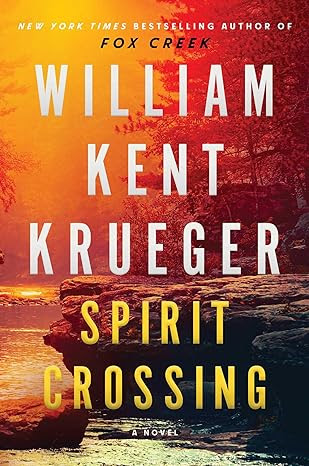
When I saw Spirit Crossing offered on NetGalley, I was pleased to have the opportunity to read more by Kreuger. As it turned out, the book was even better than expected, and I was delighted to reconnect with Cork O'Connor and his family and friends.
When the daughter of a white politician goes missing, everyone is involved, from local and state police to the FBI. The same has not been true for a young Objibwe woman...or other Native American women.
When on a day of picking blueberries, Cork's young grandson discovers a shallow grave, law enforcement descends on the site anticipating the possibility that the politician's daughter has been found. Cork's young grandson Waaboo (his Obibwe name given by Henry Meloux), however, insists that the body is that of an Objibwe woman and that she is lost. Crystal Two Knives has been missing for a while, and they wonder if they've found Crystal.
As it turns out, the body is that of a Native American woman, but not Crystal Two Knives and not the politicians daughter. The unidentified Native American woman creates little interest in those searching for the politician's daughter.
Cork's heritage is mixed, and he is part Objibwe and the fact that his grandson has visions doesn't surprise him, but it does concern him. When Waaboo's visions put him in danger, Cork and his family's concern escalates.
Spirit Crossing's strength lies in Kreuger's prose, his characters, and his adept plotting, as well as the way Kreuger illustrates cultural problems.
Highly recommended; however, I recommend beginning with the first books in the series to become familiar with the characters.
Because the characters I remembered from Iron Lake (bk 1) had grown so much in the interim, I took my own belated advice and read the second and third in the series and reviewed them in the previous post.
Thanks to NetGalley and Atria Books


.jpg)